
Rosen Law Firm is urging investors who purchased Nano-X Imaging Ltd. securities between March 31, 2025 and April 17, 2026 to join a class action lawsuit. The lawsuit alleges that Nano-X made false statements about operational efficiency and product demand, while concealing poor manufacturing alignment, increased operating expenses, and significant cash burn that would require disruptive restructuring measures. The lead plaintiff deadline is August 11, 2026.
News Hub · 2026-07-19
The market, in seven rooms
Your one-scan market briefing. Start with the live news feed, then explore by room — who's moving, the data underneath, and the news by topic (politics, stocks, the Fed, crypto) — each with its own bull-vs-bear meter. Use the // switch up top to lean the page bull or bear.
Mixed · 50% green
Scanner 98m ago · 4582 tickers
Next Bullish Trade
Graded trade ideas, every day
Free email briefings, live tools, and full-market Pro coverage — start with whatever fits you.
Free briefings
Free
Top graded setups + weekly reports delivered to your inbox. Pick your topics — no spam, leave anytime.
Get the newsletter
Free tools
Free
Compare two stocks head-to-head and grade your chart with AI — entry, stop, target — right here on the page.
Try them now
Go Pro
Upgrade
Every graded setup across 4,500+ US stocks — calls & puts, each with two ready option ideas.
AAAA
Unlock 1756 hidden setups
🛌 Markets closed for the weekend
Showing the last open session.
Markets now
Key indices, rates, gold, oil & crypto — tap any to open it
10-yr Yield
-0.61%
^TNX · 4.54
Neutral
VIX
+12.19%
^VIX · 18.77
Neutral
Dollar Index
-0.04%
UUP · 28.33
Neutral
Gold
+0.95%
GLD · 368.41
Pullback
Oil (WTI)
+3.91%
USO · 123.96
Extended
Bitcoin
-0.04%
BTC-USD · 64769.17
Neutral
20+ yr Treasury
+0.37%
TLT · 84.52
Pullback
Overall news sentiment across politics · stocks · fed · crypto
29% bull·26% bear·45% neutral
(31)
The room is split — bulls 29%, bears 26% across 31 signals.
Browse by room
Viewing Intel · The data underneath
Lead market catalyst
·
Pre-Market Macro
NEUTRAL
No Fed rate decision or meeting today; the next FOMC meeting is July 28–29, with the rate decision on July 29.
No immediate catalyst today; next FOMC is 6 weeks out so minimal rate-decision gamma, but keeps July put spreads and VIX positioning on the table as the meeting approaches.
Feed
The latest publisher headlines, grouped by the kind of news — earnings, deals, analyst calls, the Fed, crypto. Tap ☆ Save on any story to keep it, follow a ticker to pin its stories under "For you", and Pro members can ask the AI about any story.
Following:
Top stories
The freshest image-led reports


For you
Stories matching what you follow
Saved stories
Kept on this device — no account needed
Nothing saved yet — tap ☆ Save on any story to build your reading list.
Earnings
56 stories
Should You Buy SoFi Stock Before the Huge Investor Update?
SoFi Technologies is scheduled to release critically important information to investors, with earnings expected on July 29, 2026. The article discusses whether investors should buy SoFi stock ahead of this major update, noting that investors were hoping for lower interest rates in 2026.
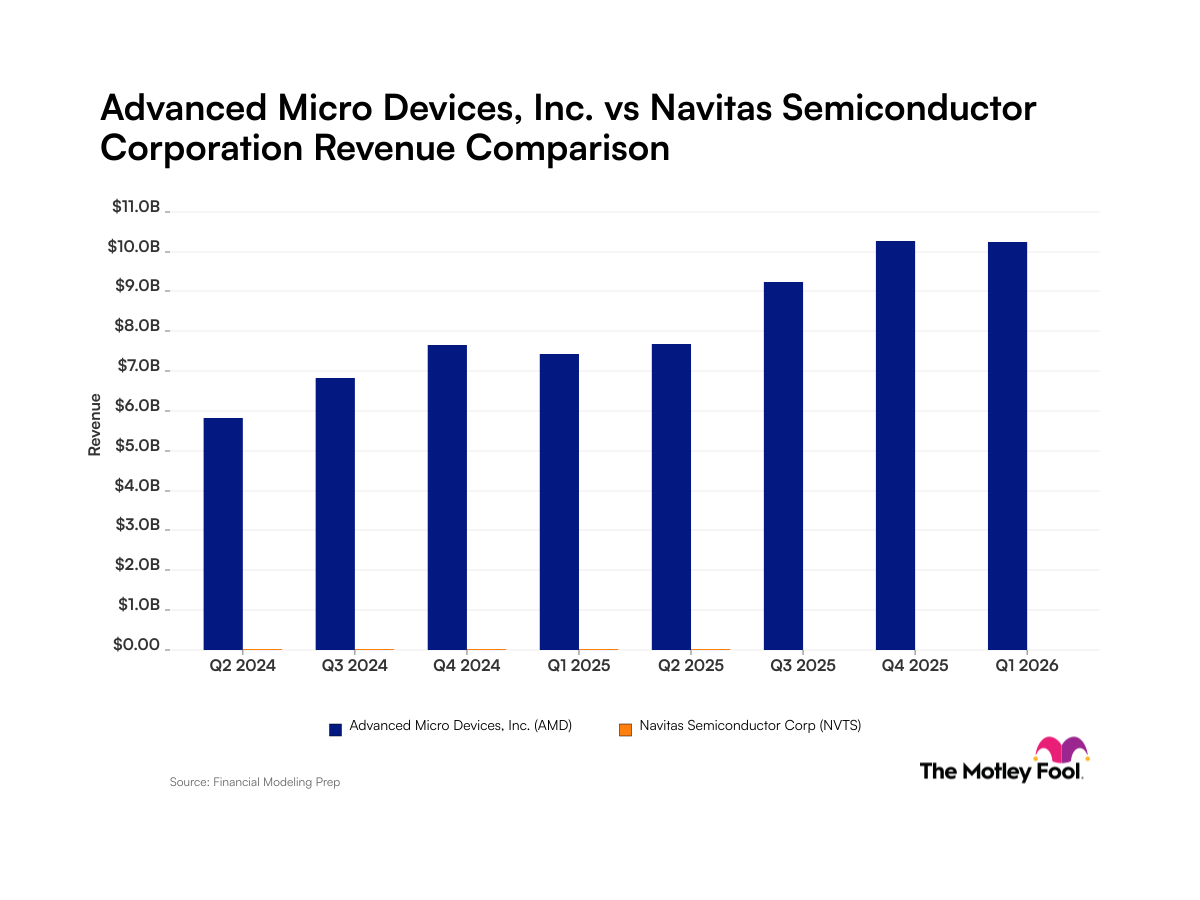
Advanced Micro Devices vs. Navitas Semiconductor: Here's What The Quarterly Revenue Trends of These Artificial Intelligence Companies Reveal to Investors
AMD has demonstrated strong and steady revenue growth of 77% over eight quarters, reaching $10.3 billion in Q1 2026, while Navitas Semiconductor has experienced a 58% revenue decline to $8.6 million in the same period. Although Navitas intentionally exited its China mobile and consumer businesses to focus on AI, the company faces headwinds from a Wolfspeed patent lawsuit and shareholder dilution concerns from a $500 million equity offering.

Is It Too Late to Buy Johnson & Johnson After Its Blowout Earnings Report?
Johnson & Johnson delivered strong earnings with revenue growth of 6% to $25 billion and raised full-year guidance to $101.1 billion. Key drugs like Darzalex (up 18%) and Tremfya (up 72%) offset Stelara declines. While the stock has gained 22% this year and trades near valuation highs, the company's broad portfolio of 28+ blockbuster products and 50+ years of dividend increases make it attractive for long-term and dividend-focused investors, though value investors may wait for a better entry point.

Alphabet's Gemini 3.5 Pro Is Late and the Stock Is Slipping. Is the AI Leader Falling Behind?
Google's flagship AI model Gemini 3.5 Pro is months behind its promised June launch date as the company works to improve coding capabilities, raising concerns about competition from OpenAI and Anthropic. Alphabet's stock has declined 15% from its 2026 peak. However, strong Q1 results show Google Cloud revenue grew 63% year-over-year and the cloud backlog nearly doubled to $460 billion, suggesting customer demand remains healthy despite the delay.

Elon Musk's Tesla Remains One of the Last Great Founder-Led Tech Giants. Is the Stock a Buy Before July 22?
Tesla reports Q2 earnings on July 22 with strong vehicle sales up 25% year-over-year (480,126 units sold). While the core EV business faces competition from BYD and Rivian, Tesla's growth opportunities lie in services (up 42%), full self-driving software, and the Optimus robot project. Analysts have a consensus price target of $425, representing 11.5% upside potential. Much depends on Musk's ability to convince investors about Tesla's long-term vision during the earnings call.

Interactive Brokers Grew Its Customer Accounts 34% in a Year. Here's the Bull Case Before Q2 Earnings.
Interactive Brokers reported strong June 2026 metrics with 34% year-over-year growth in customer accounts to 5.185 million, 40% increase in client equity to $930.3 billion, and 53% surge in trading volume. The company also saw margin loan balances jump 67% to $108.5 billion. Q1 2026 revenues grew 17% to $1.67 billion with adjusted earnings up 28% to $0.60 per share. However, the stock trades at valuations roughly twice its five-year averages, suggesting high market expectations that could lead to disappointment if Q2 results don't exceed forecasts.

Meta Platforms: Is This the Most Undervalued Stock in Big Tech? (NASDAQ: META)
Meta Platforms trades at an attractive valuation of 18.7x forward earnings, cheaper than peers like Amazon (29x) and Alphabet (25x), while maintaining the fastest growth rate in its peer group. The stock has rallied on rumors of a new cloud computing division that could monetize excess AI computing capacity. However, market skepticism persists due to Meta's massive spending on AI infrastructure without clear returns, and its poor track record with cutting-edge technologies. The author views Meta as undervalued with a bright future driven by its strong ad business, potential cloud computing venture, and AI products.
TSMC vs. ASML: Which Is the Better AI Semiconductor Ecosystem Stock to Buy?
The article compares TSMC and ASML as investment opportunities in the AI semiconductor ecosystem. TSMC has a virtual monopoly on advanced logic chip manufacturing and is benefiting from strong AI demand with 34% Q2 revenue growth and 67.6% gross margins. ASML holds a monopoly on EUV lithography machines essential for chip production but shows slower growth (21% Q2 revenue) and lower margins (54%). The author recommends TSMC as the better buy, trading at a forward P/E of 19x versus ASML's 30.5x, citing superior growth prospects and undervaluation.

3 Stocks I'm Buying After Taiwan Semiconductor's Stellar Announcement
Following TSMC's strong Q2 earnings with 36% revenue growth and 77% EPS increase, the author recommends buying TSMC, Nvidia, and Broadcom as attractive opportunities. TSMC's $100 billion Arizona investment and CEO projections of strong demand through 2029-2030 signal continued AI chip demand. Nvidia and Broadcom are trading below all-time highs despite strong growth forecasts, presenting buying opportunities in the AI semiconductor sector.

Carnival Reported Earnings on June 23, Royal Caribbean Is Next on July 28, Then Norwegian Cruise Line on July 30. Here's My Top Buy of the Bunch.
The cruise industry has completed its post-pandemic recovery with healthy occupancy rates and pricing. Among the three largest cruise operators, Royal Caribbean is recommended as the top buy due to its strongest financial results, industry-leading profitability, record bookings, and healthier balance sheet compared to Carnival and Norwegian Cruise Line, which both carry higher debt levels relative to their earnings.
Taiwan Semiconductor Manufacturing: Is the Stock a Buy as Revenue Continues to Soar?
TSMC reported strong Q2 results with 34% year-over-year revenue growth to $40.7 billion and gross margin expansion to 67.6%. The company raised full-year revenue guidance to over 40% growth and increased 2026 capex budget to $60-64 billion, signaling sustained AI chip demand. Trading at a forward P/E of ~20x, the stock is viewed as attractively valued given its monopolistic position in advanced chip manufacturing.

Microsoft Stock Is Down 27% From Its All-Time High. 2 Reasons It Could Double by 2030.
Microsoft stock has declined 27% from its all-time high due to Wall Street concerns over heavy AI infrastructure capital spending ($190B in 2026). However, the company's strong enterprise relationships, 16% projected annual earnings growth, and leadership in agentic AI through its Copilot platform position it to potentially double by 2030. With nearly 90% of Fortune 500 companies using Copilot Studio and a $627B backlog, Microsoft's long-term competitive advantages may offset near-term margin pressures.
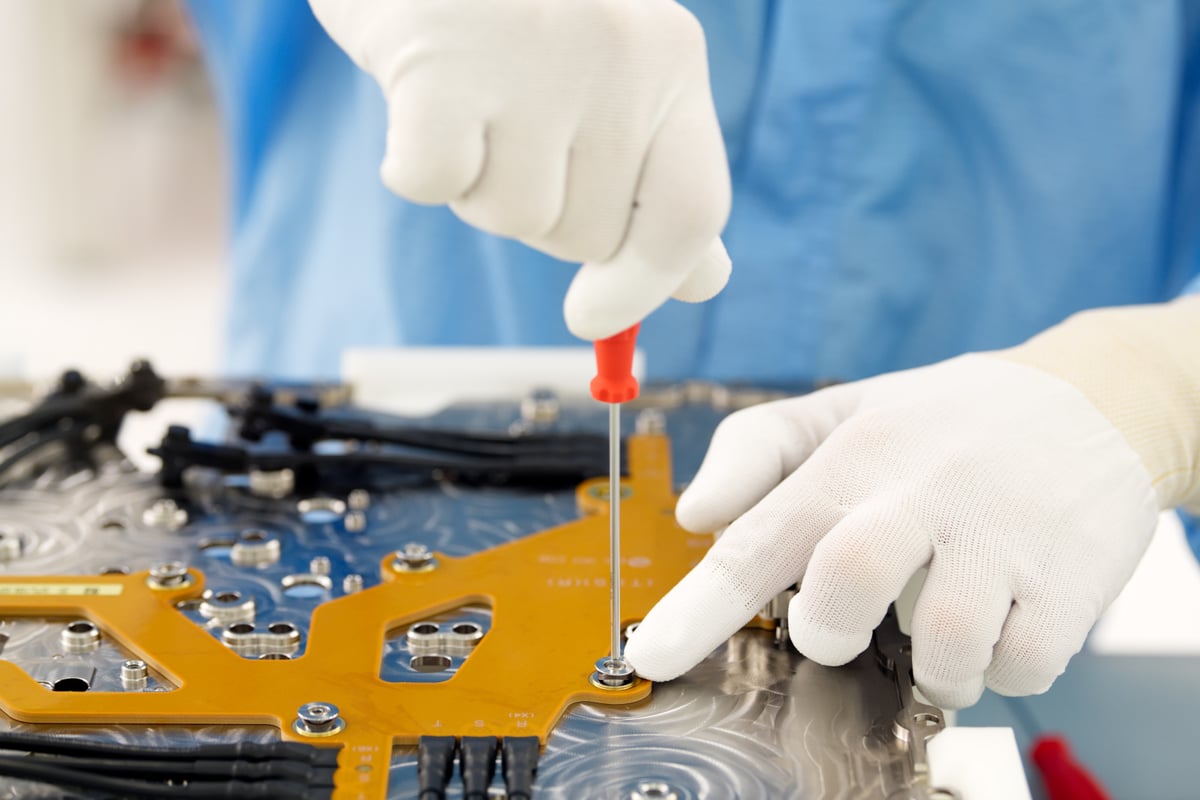
Where Will ASML Stock Be in 5 Years?
ASML raised its 2026 sales outlook to 43-45 billion euros, driven by strong AI-related chip demand. The company plans 30% capacity expansions for its EUV lithography machines in 2027 and 2028. While the business fundamentals are strong with potential for 8-12% annual returns over five years, the stock's 121% run-up has created a valuation risk, trading at 40x 2026 earnings with limited room for error.

Elon Musk Admits He Underestimated Anthropic's AI, and Amazon and Alphabet Investors Should Take Notice
Elon Musk publicly reversed his previous dismissal of Anthropic, now calling it 'obviously currently the leader in AI.' This validation is significant for Amazon and Alphabet, which hold major stakes in Anthropic (Alphabet ~14%, Amazon mid-to-high teens) worth over $100 billion each. Both companies also benefit from massive long-term cloud service commitments from Anthropic. However, investors should note that recent AI-related gains are largely paper valuations rather than sustainable operating earnings, and the arrangement depends on continued AI boom momentum.

Here's Why Coca-Cola's Magnificent Rise Could Come to an End on July 28
Coca-Cola stock has surged nearly 20% year-to-date, outperforming the S&P 500, driven by investor appreciation for its dividend reliability and strong Q1 results. However, the article suggests the stock's rise may be ending as it trades at an expensive 24x forward earnings for a low-growth company. With Q2 earnings due July 28 and management guiding for slower growth later in the year, the stock may have limited upside despite its quality as a dividend investment.
AMD Stock Is a Fraction of Nvidia's Size but Trades on the Same AI Story. Here's Where the Two Actually Diverge.
While both Nvidia and AMD have benefited from AI accelerator demand, their business strategies diverge significantly. Nvidia has concentrated 92% of revenue in data center AI chips, achieving 85% revenue growth and trading at 31x earnings. AMD maintains a more diversified portfolio across CPUs, GPUs, and embedded chips, with 56% from data center and 35% from client/gaming segments, posting 38% revenue growth but trading at a higher 161x P/E ratio. Nvidia's first-mover advantage and lower valuation make it the more attractive buy despite AMD's solid diversification strategy.
Intel Stock Soared About 278% in the First Half of 2026, Then Fell 10% in a Single Day. Buy the Dip or Run for the Hills?
Intel's stock surged 278% in H1 2026 under CEO Lip-Bu Tan due to successful 18A process adoption and foundry business wins from Tesla and Apple. However, a 10% single-day drop in July suggests the stock price has outpaced fundamentals. With forward P/E ratios of 127-89 and modest 7% revenue growth, analysts recommend holding rather than buying, as the valuation appears years ahead of anticipated earnings growth.
2 Reasons to Buy Netflix Stock on the Dip
Netflix stock has declined 24% year-to-date and 42% over the past 12 months following disappointing Q3 guidance, despite solid Q2 results. The article argues the stock presents a buying opportunity due to Netflix's potential expansion into sports streaming and its attractive valuation metrics compared to tech sector averages.

Chubb Trades at Just 12 Times Earnings, Well Below the Broader Market. Is One of the World's Biggest Insurers a Bargain?
Chubb, the world's largest publicly traded property and casualty insurer, trades at a 12x P/E ratio compared to the S&P 500's 32x multiple, suggesting potential undervaluation. The company has delivered 226% total returns over the past decade and expects continued growth through middle-market expansion, AI upgrades, and higher fixed-income yields. With a 33-year dividend increase streak and a $7.5 billion buyback authorization, Chubb appears to be a stable, defensive investment opportunity.
Netflix Stock's Last Decade Was Spectacular. But What Will the Next Decade Look Like?
Netflix delivered a 21% annualized return over the past decade, turning a $10,000 investment into $68,500. However, the company faces a growth deceleration with revenue growth slowing from 17.6% to a forecasted 11.7%, though Q2 results were solid with 13% YoY revenue growth and expanding operating margins. The stock trades at 21x forward earnings, down 47% from its 52-week high, with advertising and live programming emerging as key growth drivers.
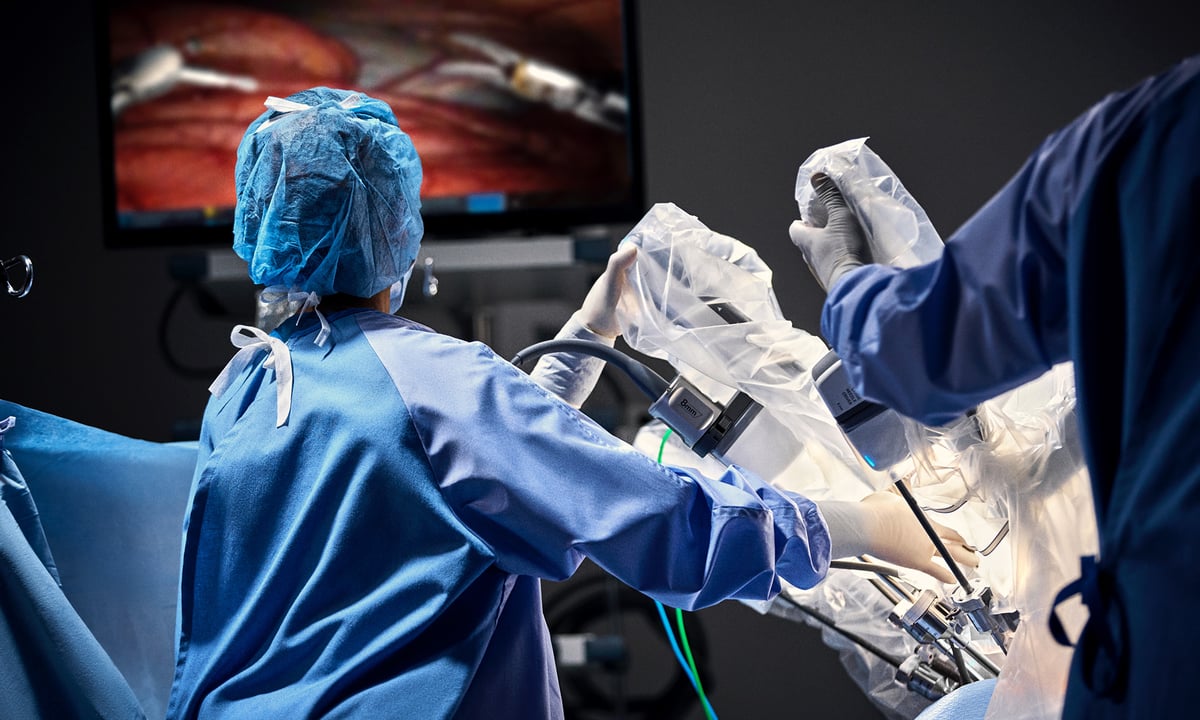
Why Intuitive Surgical Stock Dropped This Week
Intuitive Surgical's stock fell this week despite beating Q2 earnings expectations with 19% revenue growth and 25% adjusted net income growth. The decline was triggered by management's decision not to raise full-year guidance, signaling slower growth ahead. Wall Street responded with multiple price target cuts as investors sold shares.

JPMorgan Chase CEO Jamie Dimon Thinks AI Spending Is Going to Reach $1 Trillion Next Year
JPMorgan Chase and Goldman Sachs reported strong Q2 earnings driven by investment banking growth. CEO Jamie Dimon projects AI spending will reach over $1 trillion in 2027, up from $700 billion in 2026, signaling continued economic expansion fueled by AI infrastructure investment.
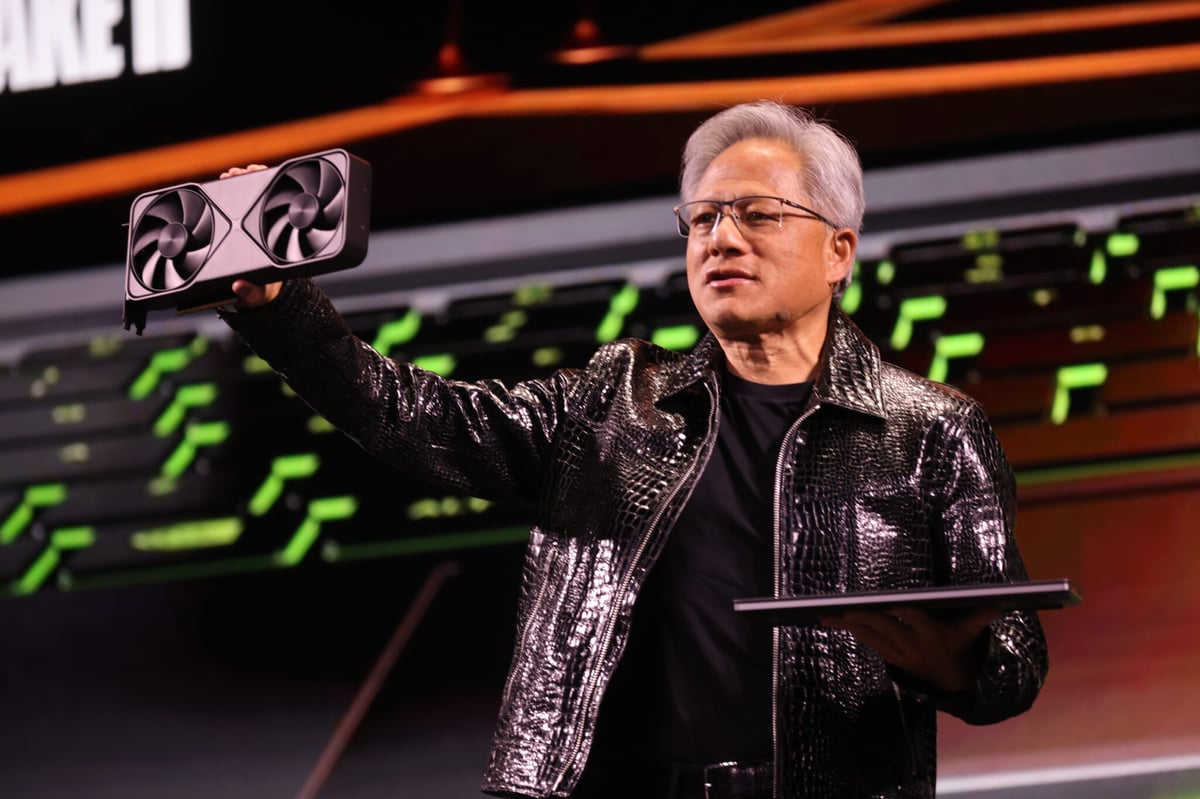
Nvidia: Jensen Huang's Company Is Still the King of AI, and the Stock Is a Buy
Nvidia remains the dominant AI chipmaker under CEO Jensen Huang's visionary leadership. The company has strategically positioned itself across the entire AI infrastructure stack through key acquisitions (Mellanox, Groq assets) and product development, including GPUs, CPUs, and LPUs. Trading at 16x fiscal 2028 earnings estimates with strong growth, Nvidia is well-positioned for future AI markets including inference and agentic AI workloads.

Milton Hershey School Trust Sells 30,000 Hershey Shares for $5.2 Million. Here's What Investors Should Know.
The Milton Hershey School Trust sold 30,000 shares of Hershey Company stock for approximately $5.2 million on July 13-14, 2026, at weighted-average prices ranging from $169.44 to $177.64 per share. The trust retains substantial ownership with ~1.3 million common shares and ~54.6 million Class B shares. The transaction is characterized as routine portfolio management and should not concern investors. Hershey faces headwinds from cocoa prices and GLP-1 medicines but trades at a reasonable 20x forward earnings with a 3.4% dividend yield.
Zoetis Inc. (ZTS) Investors: July 27, 2026, Filing Deadline in Securities Fraud Class Action - Contact Kessler Topaz Meltzer & Check, LLP
A securities fraud class action lawsuit has been filed against Zoetis Inc. for allegedly making materially false statements about product adoption during the class period of January 14, 2025 through May 6, 2026. The lawsuit alleges the company misrepresented the performance of key products including Librela, Simparica Trio, Apoquel, and Cytopoint. Zoetis's stock fell 21.5% on May 7, 2026, following disappointing first quarter results showing significant decline in its Companion Animal business. Investors have until July 27, 2026, to file for lead plaintiff status.

NextEra Energy Plans to Spend $59 Billion in Annual Capex Through 2032. Will This Massive Capital Outlay Pay Dividends for Shareholders?
NextEra Energy plans to invest $59 billion annually through 2032, with its acquisition of Dominion Energy positioning the combined company to capitalize on expected 60% growth in electricity demand by 2045. The capital spending is projected to support 9%+ annualized earnings growth and enable the company to maintain its decades-long dividend increase streak, making it attractive for dividend growth investors.

ASML: Is the Stock a Buy as Demand for EUV Lithography Machines Soars?
ASML, which holds a practical monopoly on extreme ultraviolet (EUV) lithography technology, is seeing surging demand for its equipment driven by booming AI chip and memory markets. The company reported Q2 revenue of €9.3 billion, beating guidance, and raised its 2026 revenue forecast to €43-45 billion. With plans to increase manufacturing capacity by 30% and potentially another 30% in 2028, ASML appears well-positioned for long-term growth despite trading at a premium 35.5x forward P/E ratio.

Tesla Just Posted Its Best Second Quarter Deliveries Ever. Here's the 1 Number That Will Actually Move the Stock on July 22.
Tesla delivered a record 480,126 vehicles in Q2 2026, up 25% year-over-year, but investors will focus on automotive gross margin excluding regulatory credits when earnings are reported on July 22. The key metric has improved for four consecutive quarters, reaching 19.2% in Q1 2026. If margins hold near 19% on record volume without one-time benefits, it supports the bull case; if they decline to mid-teens, it suggests volume was achieved through discounts rather than genuine profitability gains.

SpaceX Stock vs. Micron Stock: Buy One and Sell the Other, According to Certain Wall Street Analysts
CFRA analysts recommend selling SpaceX and buying Micron. SpaceX, despite dominating the space industry with reusable rocket technology and Starlink's 12 million subscribers, trades at an expensive 88x sales valuation with a sell target of $115 (12% downside). Micron benefits from severe memory chip supply shortages with DRAM and NAND prices up 90-110% annually, posting 345% revenue growth and 1,215% earnings surge, with a buy target of $1,500 (76% upside) and expected 115% annual sales growth through fiscal 2027.

Why Travelers Companies Stock Crushed the Market Today
Travelers Companies (TRV) surged 9.22% on Friday following a strong Q2 earnings report that significantly beat analyst expectations. Net income jumped 46% to $2.2 billion ($10.26 per share), crushing the consensus estimate of $5.34, driven by lower catastrophe losses, favorable reserve development, and higher investment income. However, revenue growth was modest at 1% year-over-year, and net written premiums declined slightly, suggesting the strong profitability may not be sustainable.
Five Star Bancorp Declares Second Quarter Cash Dividend
Five Star Bancorp announced a cash dividend of $0.25 per share payable on August 10, 2026. The company continues its expansion strategy with the opening of a new branch in Lodi, California in July 2026, bringing its total to ten branches. Five Star also made four key hires in Palo Alto to support San Francisco Bay Area expansion.
PENTAIR PLC INVESTOR ALERT: Kirby McInerney LLP Announces Investigation Into Potential Securities Fraud
Law firm Kirby McInerney LLP is investigating potential securities fraud claims against Pentair plc following the company's July 14, 2026 announcement of significantly reduced financial guidance and immediate CFO departure. Pentair reported Q2 sales of ~$930M (17% decline vs. expected 1% growth) and adjusted EPS of ~$1.12 (vs. prior guidance of $1.47-$1.50), citing inventory realignment issues and worsening business conditions. The stock fell 15% to $64.33 on the news.

Stock Market Today, July 17: Stocks Slide as Semiconductor Rout Deepens
Major stock indices declined on July 17, 2026, as a semiconductor sell-off deepened amid geopolitical tensions and concerns about AI spending sustainability. The Nasdaq fell 1.40%, S&P 500 dropped 1.01%, and Dow Jones slipped 0.77%. Travelers Companies surged 9% on strong earnings, while chip stocks including Nvidia, AMD, and Intel tumbled. The PHLX Semiconductor Index has fallen over 13% in the past month despite being up 63% year-to-date.

Apple Had the Cash to Buy Any of 486 S&P 500 Companies, but Tim Cook Bet $851 Billion on This Instead
Apple has committed $851 billion to share buybacks since 2012 under Tim Cook's leadership, reducing outstanding shares by over 40% and boosting diluted earnings per share by 373% over 13 years. Despite sitting out the AI boom, Apple's stock has risen 22% in 2026 and 1,250% over the past decade, demonstrating the effectiveness of its capital allocation strategy focused on returning cash to shareholders rather than major acquisitions.
Chino Commercial Bancorp Reports 18% Increase In Second Quarter Earnings
Chino Commercial Bancorp reported Q2 2026 net earnings of $1.82 million, up 18% year-over-year, with EPS of $0.47. Year-to-date earnings reached $3.51 million, up 21%. The bank achieved record total assets of $519 million, deposits of $391.6 million, and loans of $242.1 million. The company announced a 20% stock dividend and highlighted strong loan quality with only two delinquent loans and robust merchant services growth of 37% in card processing volume.
nVent Electric plc to Report Second Quarter 2026 Financial Results on July 31
nVent Electric plc will report second quarter 2026 financial results on July 31, 2026, with a conference call at 9:00 a.m. ET. The company has appointed Nitin Jain as Chief Strategy Officer and Joe Stark as Chief Revenue Officer to drive growth in electrification and accelerate the next phase of company expansion.
This Wall Street Firm Just Placed a $725 Price Target on AMD Stock. Here's Why It's Wrong.
KeyBanc set a $725 price target on AMD, implying a 40% gain, but analyst Keithen Drury argues this is overly optimistic. AMD trades at a premium valuation despite lagging Nvidia in AI accelerators and lacking the profit margins to justify current prices. Even under highly optimistic scenarios, AMD would trade at 36x forward earnings, making Nvidia the better investment.

SpaceX Stock Drops on Friday. Should Investors Cheer?
SpaceX stock fell below its IPO price on Friday, dropping 4% to $125.93 per share. Despite near-term headwinds including competition from China, delayed Starship tests, and AI sector selloffs, analysts project 152% annual earnings growth over five years, suggesting the stock may be approaching fair value.

Dow Holds Steady While Nasdaq Stumbles: What Moved Markets This Week
The Nasdaq fell 2.5% for the week amid concerns about unsustainable AI infrastructure spending, with major tech stocks declining. The Dow remained relatively stable, buoyed by strong earnings from Travelers and UnitedHealth Group. Chip stocks faced particular pressure following Taiwan Semiconductor's increased capex forecast and IBM's profit warning, while Netflix dropped 8.5% despite meeting expectations.

Micron Is Quietly Becoming a More Reliable Long-Term Growth Play
Micron Technology has experienced a 30% pullback from its 52-week high despite strong quarterly results, presenting a buying opportunity for long-term investors. The company benefits from structural demand for memory chips driven by AI data centers, with supply shortages expected to persist beyond 2030. Analysts project 785% EPS growth in fiscal 2026, with potential for the stock to reach nearly $2,000 by 2030 if earnings growth continues and the company trades at a modest 10x earnings multiple.
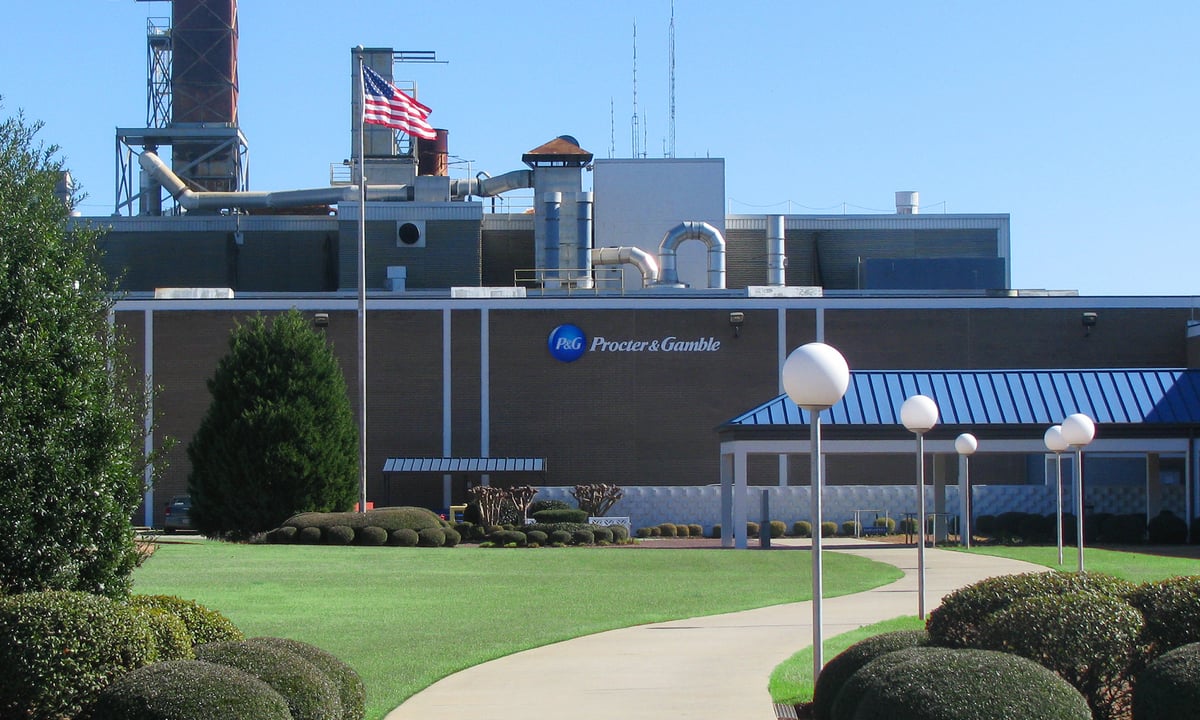
Procter & Gamble Has Raised Its Dividend for 70 Straight Years. Only 5 Other Companies Can Say the Same.
Procter & Gamble raised its quarterly dividend by 3% in April, marking its 70th consecutive year of dividend increases and 136 years of continuous dividend payments since 1890. With a current yield of 2.9%, a payout ratio of 63%, and plans to distribute $10 billion in dividends in fiscal 2026, P&G demonstrates the durability of its consumer staples business. The stock trades at 21x earnings, offering a reasonable valuation for income-focused investors seeking dependable dividend growth.

Now We Know Why Netflix Is Trying but Failing to Go on a Shopping Spree
Netflix's stock plummeted following disappointing Q2 earnings, with revenue growth slowing to 13.4% and weak forward guidance of 11.7% for Q3—its slowest growth in three years. The company is pursuing acquisitions and exploring free trial eligibility and ad-supported tiers as organic growth stalls, signaling desperation rather than strategic expansion. While profitability improved, investors are concerned about slowing subscriber growth and the company's ability to maintain momentum.

3 Utility Stocks Built for the Coming AI Power Crunch
As AI data centers proliferate globally, electricity demand is surging, creating significant opportunities for utility stocks. Three electric utilities are particularly well-positioned to benefit: Constellation Energy (nuclear power focus with direct Meta deals), Entergy (supplying Meta's $50B Louisiana data center), and NextEra Energy (merging with Dominion to gain exposure to Virginia's 'data center alley'). All three stocks offer dividend growth potential alongside earnings expansion driven by AI infrastructure demand.
Sandisk Stock Has Jumped Over 500% in 2026. It Can Still Become a Multibagger Thanks to This Massive News
Sandisk has secured a long-term supply agreement with Meta Platforms for NAND flash memory chips to support Meta's AI data center expansion. With a $42 billion revenue pipeline from five multi-year agreements, expected memory chip shortages lasting 4-5 years, and variable pricing riders that capture upside from price increases, analysts project Sandisk's stock could reach $4,657 (2.6x upside) if earnings reach $232.88 per share within two years.
CSW Industrials Declares Quarterly Dividend of $0.30 Per Share
CSW Industrials declared a regular quarterly cash dividend of $0.30 per share payable August 14, 2026. The company reported robust fiscal 2026 fourth quarter results with record quarterly and full year performance, with the Contractor Solutions segment returning to positive organic growth.
Cloudastructure Reports Revenue Growth of 78% Year-Over-Year for the 2026 First Quarter
Cloudastructure reported Q1 2026 revenue of $1.315 million, up 78% year-over-year, with recurring revenue reaching an annualized run rate of $2.6 million. The company expanded its AI-driven security platform across multifamily, transportation, and logistics sectors, now serving 8 of the top 10 NMHC-ranked multifamily property managers. Despite strong revenue growth, the company posted a net loss of $2.8 million as it continues investing in platform scaling and operational expansion.

Should You Buy Tesla Stock Before Earnings on July 22?
Tesla's Q2 earnings on July 22 are expected to show strong EV delivery growth (~480k units) and automotive revenue around $20.1-20.7B, up 22% YoY. However, the article suggests investors shouldn't rush to buy before earnings as major announcements on Optimus robots or robotaxi/v15 software are unlikely, with no game-changing catalysts expected. Long-term investors can wait to buy as the stock lacks near-term catalysts.
AFC Schedules Earnings Release and Conference Call for the Second Quarter Ended June 30, 2026
Advanced Flower Capital Inc. (Nasdaq: AFCG) announced it will release its Q2 2026 financial results on August 13, 2026, with a management webcast at 10:00 am ET. The company also committed $7 million to a $25 million senior secured credit facility and announced a dividend for Q2 2026.
Abacus Global Management to Announce Second Quarter 2026 Financial Results on Thursday, August 6, 2026
Abacus Global Management (NYSE: ABX) announced it will release its second quarter 2026 financial results on August 6, 2026, followed by a conference call at 5:00 pm ET. The company will provide a live webcast on its investor relations website.
Enovis to Host Second Quarter 2026 Results Conference Call on August 6th
Enovis Corporation (NYSE: ENOV) announced it will host an investor conference call on August 6th, 2026 at 8:30 a.m. Eastern Time to discuss its second quarter 2026 financial results. The company will issue an earnings press release that morning, with the live webcast and presentation accessible from its website.
Nvidia and AMD Investors Must Be Prepared for Aug. 4
AMD reports Q2 earnings on Aug. 4 with high expectations for 47% revenue growth. The stock has surged 130% in 2026 and trades at a 75x forward P/E ratio, making it vulnerable to disappointment. Nvidia, trading at only 24x forward earnings despite faster expected growth (~100%), could benefit if AMD confirms strong AI demand. Analysts suggest Nvidia offers better value than AMD at current valuations.

If You Invest $2,000 in Ares Capital Today, Here's the Dividend Income You Could See by 2030
Ares Capital (ARCC) offers a 10.2% dividend yield, significantly higher than the S&P 500's 1%. A $2,000 investment would purchase approximately 105 shares at $19 per share, generating $100.80 in dividend income by year-end if the current $0.48 quarterly dividend is maintained. The BDC has maintained a stable-to-growing dividend for over 16 years, with sufficient earnings cushion to support the current payout level through 2030.

Here's Why ON Semiconductor Just Made a $7 Billion Bet on AI
ON Semiconductor announced a $7 billion all-stock acquisition of AI edge solutions company Synaptics, transforming itself from a power and sensing chip company into one offering connected compute technology for physical AI applications. While the market initially reacted negatively, management expects the deal to add to earnings within 18 months, generate $200 million in synergies, and expand the company's total addressable market by $30 billion to $243 billion by 2030. The analyst views the stock dip as a buying opportunity, positioning the move as a bold but strategic entry into the long-term AI inference market.

Here's Why Aehr Test Systems Surged Higher This Week
Aehr Test Systems stock surged 20.9% following strong Q4 earnings that confirmed the company's successful transition from the EV market to the higher-growth AI processor market. The company reported record bookings of $60.7 million and a $100 million backlog, with management projecting fiscal 2027 revenue of $130-150 million compared to $50 million in 2026. AI-related products now represent approximately 71% of annual revenue, up from less than 5% two years ago.
Click Holdings Limited (CLIK) Surpasses 6 Million Senior Care Hours; Unveils Global ESG Framework to Power International and Mainland China Expansion
Click Holdings Limited announced it has delivered over 6 million cumulative senior care service hours and unveiled a global ESG framework to support expansion into Mainland China and international markets. The company reported 73% year-over-year Q3 revenue growth with 110% growth in its senior nursing division, and targets HK$500 million in annual revenue within three years by leveraging its AI-powered HR and senior care solutions.
CrossAmerica Partners to Announce Second Quarter 2026 Earnings Results on August 5
CrossAmerica Partners LP announced it will release its second quarter 2026 earnings results on August 5, 2026, followed by a conference call on August 6 at 9:00 a.m. Eastern Time. The company is a leading wholesale distributor of motor fuels operating across 34 states with approximately 1,500 distribution locations.
Deals & M&A
17 stories

Anthropic's Potential $1.2 Trillion IPO Could Make This Stock a Major Beneficiary
Anthropic is moving toward a potential October IPO at a $1.2 trillion valuation. Amazon, which has invested $13 billion and owns 15-20% of the company, stands to benefit significantly. Beyond the investment gains of $180-240 billion, Amazon will gain from Anthropic's $100+ billion in AWS commitments over the next decade, including AI infrastructure capacity. The IPO will strengthen Anthropic's financial position and support its aggressive AI spending, benefiting Amazon's cloud computing business.

Even With Elon Musk's SpaceX Stock (SPCX) Down Below Its IPO Price, I'd Still Rather Buy This Dividend Stock in July
SpaceX stock has declined below its IPO price of $193 to around $126 since its June debut. In contrast, General Mills offers a more attractive investment with a 6.3% dividend yield, 8.7% total shareholder yield, undervalued valuation metrics (P/E of 12.5), and defensive characteristics that would hold up better in a potential market downturn or recession.

AI Expectations Hit a Fever Pitch
Despite posting record profits, semiconductor and AI-related stocks are experiencing significant selloffs as investors question whether expectations have gotten ahead of fundamentals. Samsung's 19x profit increase triggered a Korean market circuit breaker, while hyperscalers like Amazon and Alphabet continue massive capital spending on AI infrastructure. The defense sector is shifting toward smaller, cheaper drones and digitalization, with Lockheed Martin acquiring Ultra Maritime for sonar capabilities.
D-Wave Quantum's CEO Sold Over 50,000 Company Shares. Here's What That Means for Investors.
D-Wave Quantum CEO Alan Baratz sold 52,320 shares (~$976k) on July 14, 2026, through a non-discretionary sale-to-cover transaction to satisfy tax withholding obligations from RSU vesting. The CEO retains ~3.2 million shares post-transaction, indicating continued alignment with the company. Despite the sale, D-Wave's stock has appreciated 20% over the past year, driven by $100M federal funding, the Quantum Circuits acquisition, and record quarterly bookings of $33.4M. However, the company remains unprofitable with a $54.7M operational loss in Q1.

How to Invest in SpaceX Stock After Its Nasdaq-100 Debut
SpaceX's stock has declined 17% since joining the Nasdaq-100 in July and fallen below its $135 IPO price, despite the index inclusion forcing ETF purchases. The stock peaked at $225.64 in mid-June but faces headwinds from high valuation multiples (87x revenue), unprofitability across segments, and upcoming share unlocks. While analysts project 97% revenue CAGR through 2028, investors should consider whether such bullish estimates are realistic before buying.

Looking for Cheap Income Stocks? Why Pfizer Belongs on Your Shortlist Right Now
Pfizer's stock has fallen over 50% from late 2021 highs, pushing its dividend yield to a historically high 6.9%. While the company faces normal industry headwinds including upcoming patent expirations and disappointing new drug development, management remains committed to protecting the dividend. The company is taking steps to address challenges, including acquiring a weight-loss drug candidate after dropping its own GLP-1 drug. More aggressive dividend investors may find Pfizer's valuation compelling despite risks.

Bill Ackman's New Closed-End Fund Trades 20% Below Its IPO Price. Is the Berkshire-Style Bet Broken?
Pershing Square USA, Bill Ackman's closed-end fund, is trading at a 20% discount to its net asset value (NAV) since its IPO. Unlike Berkshire Hathaway, which is an operating company, Pershing Square USA is a closed-end fund that trades on exchanges based on supply and demand. While the discount may seem attractive, investors should understand that closed-end funds often trade at discounts for extended periods, and the discount alone shouldn't be the sole reason for investment.
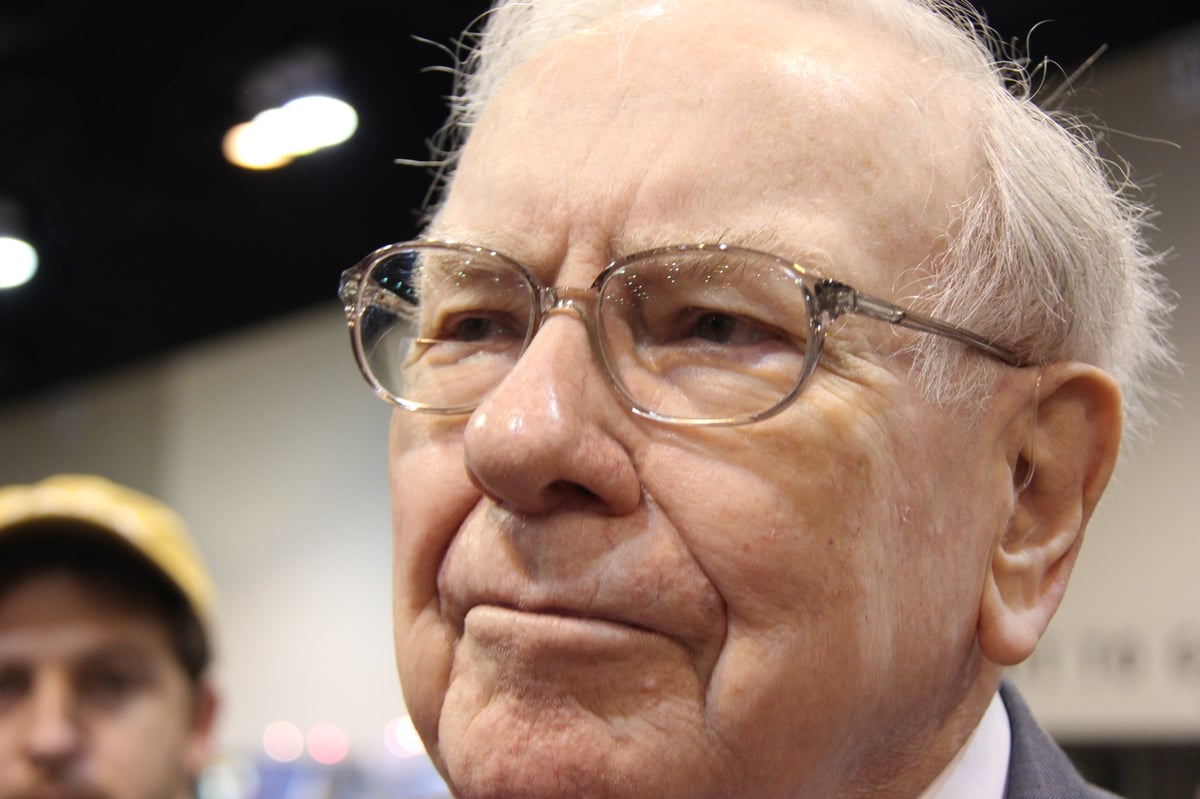
3 Warren Buffett Quotes You Must Read Before Buying SpaceX Stock
The article applies Warren Buffett's investment philosophy to SpaceX's recent IPO, arguing that investors should be cautious. Buffett avoids IPOs due to inflated valuations and selling incentives, prefers investments with clear intrinsic value and minimal variables, and favors certainty over speculation. SpaceX faces too many uncertainties across its multiple business segments (Starship, Starlink, AI, Mars colonization) to justify its current valuation, making it a poor fit for Buffett's disciplined investment approach.

Massive News for PayPal Stock Investors!
PayPal is reportedly up for sale with Stripe and Advent International bidding $60.50 per share. The acquisition offer has caused PayPal stock to surge 17%, though some investors like Michael Burry argue the bid is too low. The real prize in the deal is considered to be Venmo, PayPal's popular payment platform.
SpaceX Stock: Buy the Dip?
SpaceX stock (SPCX) has experienced a significant drop, falling 5.43% to $123.99 as of July 17, 2026. The article discusses whether this decline presents a buying opportunity for investors, with the stock dropping below its IPO price following a delayed Starship launch.

The Most Overlooked Reason Eli Lilly Stock Keeps Surging -- and It Has Nothing to Do With Weight Loss
While Eli Lilly's GLP-1 weight-loss drugs (Mounjaro and Zepbound) account for nearly two-thirds of revenues with strong growth, the company is strategically using profits from these drugs to build a diversified pipeline in immunology, oncology, and neuroscience through acquisitions like AtaiBeckley and Ventyx Biosciences. Non-weight-loss drugs are already showing 160% revenue growth, positioning Eli Lilly for long-term success beyond the limited patent life of GLP-1 drugs.
MKDWELL Tech Inc. to Acquire Premium Smart-Home and IoT Group, Diversifying Beyond Automotive Electronics
MKDWELL Tech Inc., an automotive electronics manufacturer, announced it will acquire Landvision Inc., a developer of AI-enabled smart-home and IoT products, for $240 million through the issuance of 30 million new shares at $8.00 per share. The acquisition aims to diversify MKDWELL's business into the high-growth consumer smart-home sector while leveraging complementary strengths in embedded electronics and manufacturing. Completion is expected in August 2026.
GPGI ALERT: Bragar Eagel & Squire, P.C. Announces that a Class Action Lawsuit Has Been Filed Against GPGI, Inc. and Encourages Investors to Contact the Firm
A class action lawsuit has been filed against GPGI, Inc. in the U.S. District Court for the Southern District of New York on behalf of investors who purchased GPGI Class A common stock between November 3, 2025 and May 6, 2026. The lawsuit alleges that defendants made materially false and misleading statements regarding the overstatement of Husky's value, failure to disclose that Husky was not on track to meet revenue and EBITDA targets, and that the acquisition was primarily motivated by generating fees rather than creating shareholder value.
newcleo advances MOX fuel licensing in France and enters new collaboration phase with French authorities
newcleo received a satisfactory safety opinion from French nuclear authority ASNR for its planned MOX fuel facility. The company has outgrown the France 2030 program scope due to significant capital raises and international expansion, including a planned NASDAQ listing via SPAC merger valuing it at $2.4 billion. France will continue supporting newcleo through licensing and regulatory assistance rather than direct funding.
Why SpaceX Stock Dropped on Friday
SpaceX stock fell below its IPO price after the company scrubbed a Starship test flight due to two Raptor engines failing to ignite on the Super Heavy booster. The engines will be replaced and the launch rescheduled for early next week. The analyst argues this delay is not a significant concern for long-term investors.

S&P Global Spun Off Its Mobility Business on July 1. Here's What the Leaner Ratings Giant Looks Like Now.
S&P Global completed a spinoff of its Mobility division (now Mobility Global) on July 1, 2026, creating a leaner, more focused company. The mobility business was S&P Global's smallest and lowest-margin operation (22% margins vs. 40% company average), so the separation should improve overall profitability and allow management to focus on core strengths in ratings and market intelligence. The company's 53-year dividend growth streak remains intact.

SpaceX Delayed Its Starship Launch and the Stock Fell Below Its IPO Price. One of Those Things Matters. The Other Doesn't.
SpaceX's stock fell below its $135 IPO price following a Starship launch delay, but the article argues the delay itself is unlikely to materially impact the company's long-term investment thesis. The stock decline is attributed more to thin trading float (only 4% of shares trade publicly), AI sector sell-offs, and pending lock-up expirations rather than the business fundamentals. Near-term revenue drivers like Starlink and AI compute deals remain unaffected by the delay.
Analyst Calls
19 stories

Oil Pulls the Market Lower Again
Oil prices surged 5% following the U.S. cancellation of Iran sanctions waivers and ceasefire declaration, triggering a market pullback with the Nasdaq down 5%. However, analysts suggest this may be overblown volatility driven by algorithmic trading rather than fundamental concerns. The market remains up 9% year-to-date despite sector rotation, with tech stocks experiencing significant swings. The podcast also discusses emerging low-cost EV options like Fiat's Topolino and Slate's $25,000 truck, questioning whether Americans will embrace practical, affordable vehicles. American Tower's debt is deemed manageable due to sticky telecom contracts, while satellite technology is unlikely to disrupt traditional tower infrastructure in the near term.

Analysts Project the Oklo Stock Price Will Reach $87 in 2027 -- Is the Risk-to-Reward Scenario Worth It?
Oklo's stock has declined 42% in 2026, but analysts maintain a median one-year price target of $87, suggesting potential 112% upside. However, the article cautions that these targets may be overly optimistic in the short term, as Oklo lacks commercial operations and meaningful revenue generation despite strong funding of $2.5 billion in cash. The author recommends patience, suggesting a better risk-to-reward ratio if investors extend their investment timeline beyond one year.

Warren Buffett Said He Personally Started Berkshire's $31 Billion Alphabet Position
Warren Buffett confirmed he personally initiated Berkshire Hathaway's $31 billion investment in Alphabet, admitting he should have invested years earlier. The position includes $21 billion in public shares and a $10 billion private placement from Alphabet's $80 billion equity raise. Buffett expressed confidence in Alphabet's ability to outperform competitors in the AI infrastructure race, though he noted it ranks fifth among Berkshire's holdings and isn't his favorite investment.

3 ETFs That Could Build a Complete Investment Portfolio
The article recommends a three-ETF portfolio strategy for complete diversification without requiring extensive stock picking. Start with a broad S&P 500 index fund (SPY or VOO) as the foundation, add a dividend/value ETF (SCHD) to hedge against growth stock volatility, and include a technology sector ETF (XLK or QQQ) for growth exposure. This approach provides instant diversification while acknowledging that most active investors underperform the market.

Love Stock Market Gains But Hate Risk? Here's 1 ETF Worth Looking At.
The article recommends the Vanguard U.S. Minimum Volatility ETF (VFMV) for risk-averse investors seeking stock market exposure with reduced volatility. While the fund uses active management to select less volatile stocks and charges a reasonable 0.13% expense ratio, it may underperform broader market indices like the S&P 500 over time. The ETF is best suited for investors nearing retirement who prioritize stability over maximum returns.

5 "Magnificent Seven" Stocks I'm Buying and 2 That I'm Selling
An analyst recommends buying five of the Magnificent Seven tech stocks (Nvidia, Alphabet, Amazon, Microsoft, and Meta) while selling Apple and Tesla due to expensive valuations. The five recommended stocks benefit from massive AI computing capacity investments by hyperscalers, with Nvidia positioned to gain the most from the expected $1 trillion in data center spending next year.

1 Growth Stock to Buy Before the End of July
MercadoLibre (MELI), the Latin American e-commerce and fintech giant, is recommended as a discounted growth stock despite being down 23% over the past 12 months. The company reported 49% revenue growth and 77% growth in assets under management for its fintech arm in Q1 2026, with margin pressure attributed to strategic investments in logistics and credit expansion. The analyst believes MercadoLibre will become the Amazon of Latin America, though regulatory and currency volatility risks remain.

Down 62% From Its High, Is Ethereum a Value Play or a Classic Value Trap?
Ethereum has fallen 62% from its all-time high of $4,954 and released a new 'Lean Ethereum' roadmap promising upgrades including quantum resistance, faster transactions, and improved privacy by 2029. However, the author remains bearish, arguing that value is flowing to Layer-2 blockchains rather than Ethereum itself, and competitors like Solana are outpacing it in transaction speeds. Despite institutional efforts and foundation changes, these improvements may be too little, too late.

Robinhood CFO Shiv Verma Sells 3,982 Shares for $457,000 -- Here's What it Signals for the Stock
Robinhood Markets CFO Shiv Verma sold 3,982 shares worth approximately $457,000 on July 15, 2026, under a pre-arranged Rule 10b5-1 trading plan. The sale reduced his direct stake by 7%, leaving him with 55,945 shares valued at $6.5 million. The analyst notes this modest disposal should not concern investors, as the company's operations remain strong with 39% growth in platform assets, 15% revenue increase, and expanding product offerings.
Prediction: SOXX Is About to Outperform SMH. Here's Why.
The iShares Semiconductor ETF (SOXX) is positioned to outperform the VanEck Semiconductor ETF (SMH) due to superior portfolio construction. While both are market-cap-weighted semiconductor ETFs with similar holdings, SOXX applies stricter weighting caps (8% for top 5 holdings, 4% for others) compared to SMH's 20% limit. This makes SMH dangerously concentrated with a 30% combined allocation to Nvidia and TSMC, creating significant concentration risk. SOXX's more diversified approach is expected to provide better risk-adjusted returns over the next 6-12 months.

Should You Buy Viking Therapeutics Stock on the Dip? Wall Street Is Screaming "Yes."
Wall Street analysts are bullish on Viking Therapeutics (VKTX), with a consensus price target of $91 representing a potential 150% return. The optimism centers on VK2735, a dual-formulation weight-loss drug showing promising phase 2 efficacy data. However, key phase 3 results won't arrive until late 2027-2028, and some phase 2 oral trial tolerability concerns exist. Cautious investors may want to wait for upcoming maintenance trial results before investing.

Missed Out on Sandisk's 580% Rally? Here Are 3 Chip Stocks You Can Buy Now.
Despite Sandisk's 580% rally in 2026, analyst recommends three chip stocks as smart buys: Sandisk, Micron Technology, and Nvidia. The memory chip shortage is expected to persist beyond 2027, benefiting memory producers. Nvidia trades at an unusually low 23.7x forward P/E ratio despite 85% revenue growth and expected 42% growth in 2027, presenting a potential undervaluation opportunity.

Why StubHub Stock Plummeted by 13% This Week
StubHub stock fell 13% this week after Washington, D.C. passed the RESALE Act, capping secondary ticket resale markups at 10%. Analyst Jason Bazinet estimates that if similar caps averaging 15% are implemented across multiple jurisdictions currently considering such measures, StubHub's revenue could decline by 30% and EBITDA could drop by $95 million if 20% of sales are affected.

Why Pentair Stock Suddenly Plunged to a 52-Week Low This Week
Pentair stock plummeted 18.5% to a 52-week low after the company slashed its full-year sales guidance from +2-4% growth to -4-7% decline, citing pool inventory destocking and worsening business conditions. The decline was compounded by the abrupt departure of CFO Nicholas Brazis after just four months, analyst downgrades, and securities fraud investigations into the company's disclosure practices.
Meta Platforms: AI Return on Invested Capital Is Uncertain (NASDAQ:META)
Meta is planning massive AI data center spending of $125-145 billion in 2026 alone, but CEO Mark Zuckerberg has not provided concrete details on expected returns on investment. While the company's advertising business is performing well, analysts question whether these unprecedented capital expenditures will generate adequate returns. Meta's recent announcement to lease excess compute capacity suggests potential overbuilding.

Archer Aviation vs. AST SpaceMobile: Which Aerospace Stock Is a Better Buy in 2026?
The article compares two aerospace technology stocks: Archer Aviation, developing electric vertical takeoff and landing aircraft for urban air mobility, and AST SpaceMobile, building a space-based cellular broadband network. While Archer faces regulatory certification hurdles and slower revenue generation, AST SpaceMobile shows stronger revenue growth trajectory and competitive moats through partnerships with major telecom operators. The analyst recommends AST SpaceMobile as the better buy for 2026 due to its faster path to profitability and established partnerships, despite higher capital expenditures.

WD-40: A Well-Oiled Machine With Limited Upside
WD-40 earns a Superscore of 79 out of 100 for its strong operational efficiency, robust margins (56.6%), and disciplined focus on high-margin maintenance products. However, the stock trades at a stretched valuation (P/E of 37.7) with limited growth prospects, structural headwinds from commoditization and the EV transition, and is expected to underperform the S&P 500 over the next five years.
Half-Year 2026 Financial Report available
Publicis Groupe announced strong first half 2026 results with Q2 net organic growth accelerating to +4.8%, up from Q1's +4.5%. The company has upgraded its guidance for the second half of 2026 based on continued momentum across key regions.
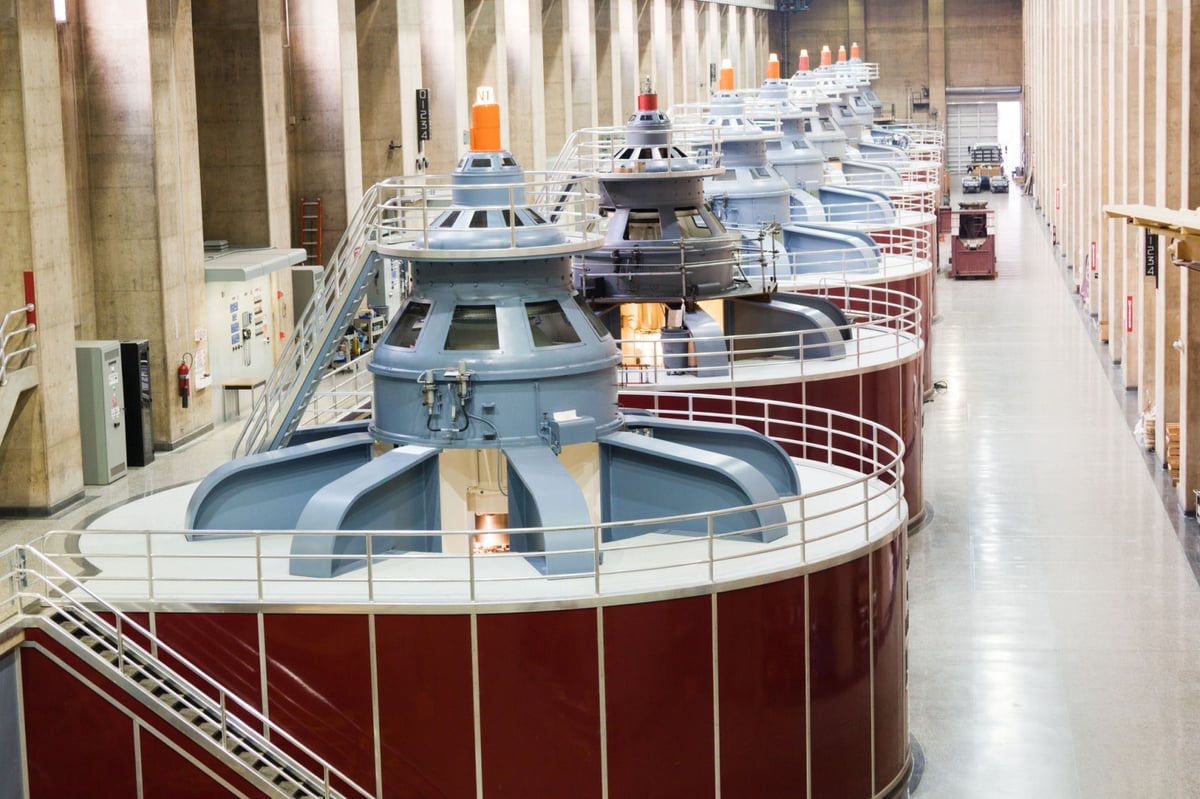
Greg Abel Sees AI-Powered Growth Ahead for This Berkshire Hathaway Subsidiary. Can This Catalyst Help the Conglomerate Outperform in the AI Era?
Berkshire Hathaway Energy is positioning itself to capitalize on growing electricity demand from AI data centers. CEO Greg Abel noted that the subsidiary is already supplying 8% of its Iowa electricity production to AI data centers, with potential for 50%+ growth over five years. However, while the opportunity is real, AI currently represents only about 4% of U.S. electricity consumption, limiting its significance as a core growth driver for the conglomerate.
Macro & Fed
8 stories

Fed Chair Kevin Warsh Just Hammered Home the 2 Words That'll Define His Tenure as Head of the Central Bank -- and They're Worrisome for Wall Street
New Federal Reserve Chair Kevin Warsh has made 'price stability' his top priority, signaling a hawkish stance on inflation with potential interest rate hikes. While controlling inflation benefits consumers, higher borrowing costs could slow AI infrastructure expansion and trigger a significant stock market correction, particularly affecting high-valuation tech stocks that have driven recent market gains.

Meet the (Almost) Dividend King with a 49-Year Streak That Wall Street Is Sleeping On
McDonald's stock has fallen 20% from its February peak due to inflation pressuring customers toward lower-margin value items, but the company is one year away from achieving Dividend King status with 49 consecutive years of dividend increases. Despite current headwinds, the article suggests this pullback presents a buying opportunity for a well-established brand with a reliable dividend history.

5 Stocks Poised to Outperform With Their Best Growth Still Ahead
Five financially strong industrial companies—GE Vernova, Vertiv Holdings, Comfort Systems USA, Sterling Infrastructure, and Powell Industries—are positioned to benefit from AI data center expansion and power grid electrification. Each company has strong balance sheets with low debt and substantial cash reserves, enabling continued investment and growth. However, valuations are elevated and all five are exposed to the same cyclical theme, so a slowdown in data center spending could impact them collectively.
Coinbase CEO Brian Armstrong Says $60,000 Is the Bottom for Bitcoin. Where Does BTC Go From Here?
Coinbase CEO Brian Armstrong predicted in June that Bitcoin hit a bottom at $60,000. With Bitcoin currently trading at $64,000, analysts suggest it could reach $100,000 within 12 months, supported by Bitcoin's historical four-year cycle pattern and increasing institutional adoption through spot Bitcoin ETFs. However, a recent poll showed mixed sentiment, with 56% of respondents skeptical about the bottom being in, citing risks from geopolitical tensions and inflation.

Fed Chair Kevin Warsh, Welcome to Your No-Win Scenario, Courtesy of President Donald Trump
Fed Chair Kevin Warsh faces a no-win scenario as inflation has surged to 4.2% (a three-year high) due to Trump's policies including tariffs and military actions, while Trump simultaneously pressures the Fed to cut rates. Warsh must choose between raising rates to combat inflation (risking Trump's ire and potentially slowing the AI-driven market rally) or holding rates steady (appearing to capitulate to Trump and damaging the Fed's credibility).
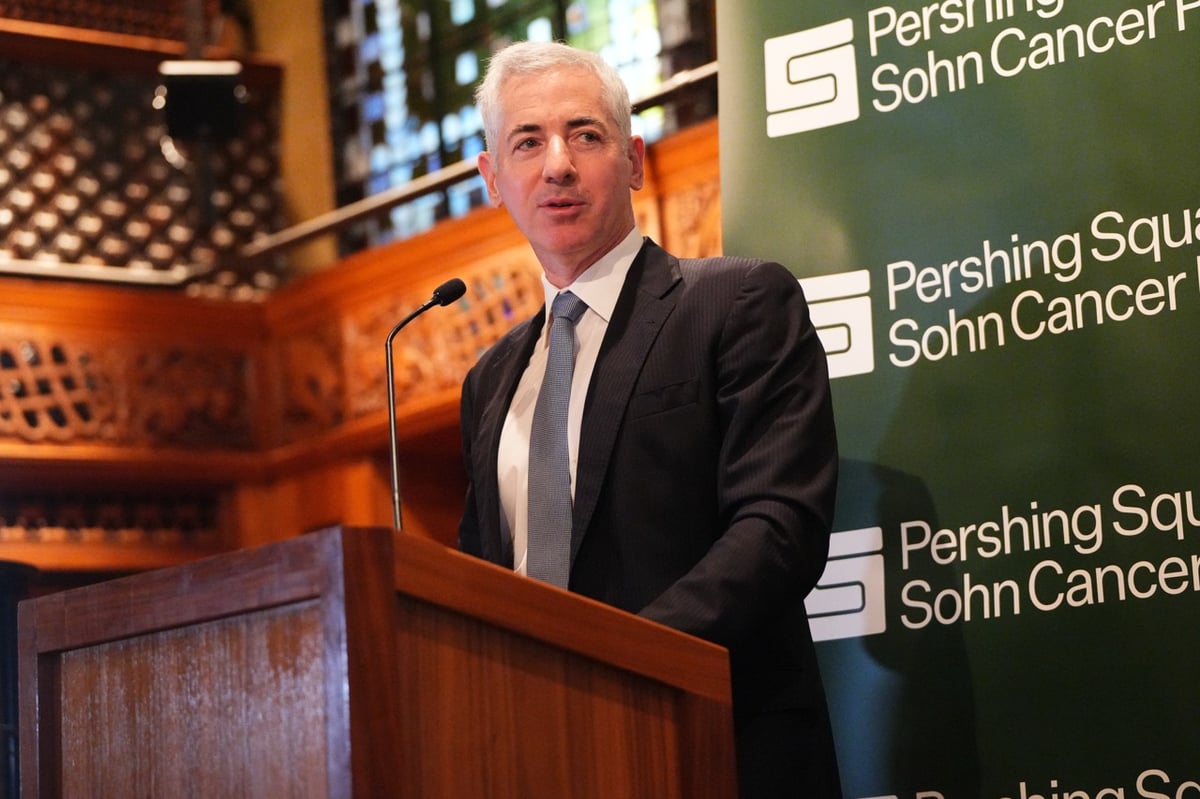
If Billionaire Bill Ackman Could Buy and Hold Only 1 Investment Over the Next Decade, Here's What He'd Buy
Billionaire hedge fund manager Bill Ackman recommends investing in a broad equity index fund as the single best investment to buy and hold for the next decade, citing superior long-term growth potential compared to other asset classes. He specifically suggests funds like the Vanguard S&P 500 ETF or Vanguard Total Market ETF for their liquidity and diversification benefits. Ackman advises against bonds due to their historically lower returns and poor near-term outlook amid rising interest rates and persistent inflation.

Inflation Isn't Just a Trumpflation Problem Any Longer -- There's a New Culprit, and It Has Potentially Dire Implications for Wall Street
U.S. inflation reached 4.2% in May 2026, more than double the Federal Reserve's 2% target. While Trump's tariffs and the Iran war initially drove inflation, the Federal Reserve now identifies AI infrastructure buildout as a significant new inflationary driver. Supply shortages for AI chips and components are creating pricing power for semiconductor companies, but this persistent inflation could prompt rate hikes that threaten the expensive stock market and slow the AI data center expansion.

Global Oil Supply Is Being Squeezed From Two Directions at Once. Here Are the Best Energy Stocks to Buy.
Geopolitical tensions in Eastern Europe and the Middle East are squeezing global oil supply, creating elevated crude prices and a fundamental market shift. High-quality oil companies with low breakeven costs, diversified operations, and strong shareholder returns are positioned to benefit. ExxonMobil and Chevron are highlighted as top picks for investors seeking inflation hedges and wealth generation through dividends and capital appreciation.
Crypto
2 stories

President Donald Trump Just Told Congress to Pass the Clarity Act. Here's the Most Likely Scenario for What Happens Next.
President Trump is urging the Senate to pass the Clarity Act, landmark crypto legislation that would clarify regulatory jurisdiction and define key terms like 'mature blockchain' and stablecoin yield rules. With a 73% likelihood of a Senate vote before the August recess and 70% odds of passage, the bill faces a tight timeline and requires seven Democratic votes. However, concerns about congressional crypto profits, criminal investigation scope, and stablecoin language from various stakeholders could complicate passage.
Bitget Melancarkan Cross-Asset Unified Account Pertama dalam Industri Dengan 100 Token Saham AS sebagai Margin
Bitget has launched a Cross-Asset Unified Account that integrates over 370 assets, including 100 tokenized US stocks (rTokens), into a single margin pool. This innovation allows users to leverage tokenized equities alongside cryptocurrencies for trading, borrowing, and portfolio management through one account, representing the third evolution in exchange account architecture focused on capital efficiency.
More headlines
113 stories

If You'd Invested $1,000 in Costco Stock 20 Years Ago, Here's How Much You'd Have Today
A $1,000 investment in Costco stock 20 years ago would have grown to $17,790 without dividend reinvestment, or $26,130 with reinvested dividends, significantly outperforming the S&P 500's $6,030 and $8,832 respectively. While Costco's valuation metrics appear fairly valued to slightly overvalued with a forward P/E ratio of 41.7, the company continues strong growth with 12% revenue and 15% net income increases, making it suitable for long-term investors despite not being a bargain at current levels.
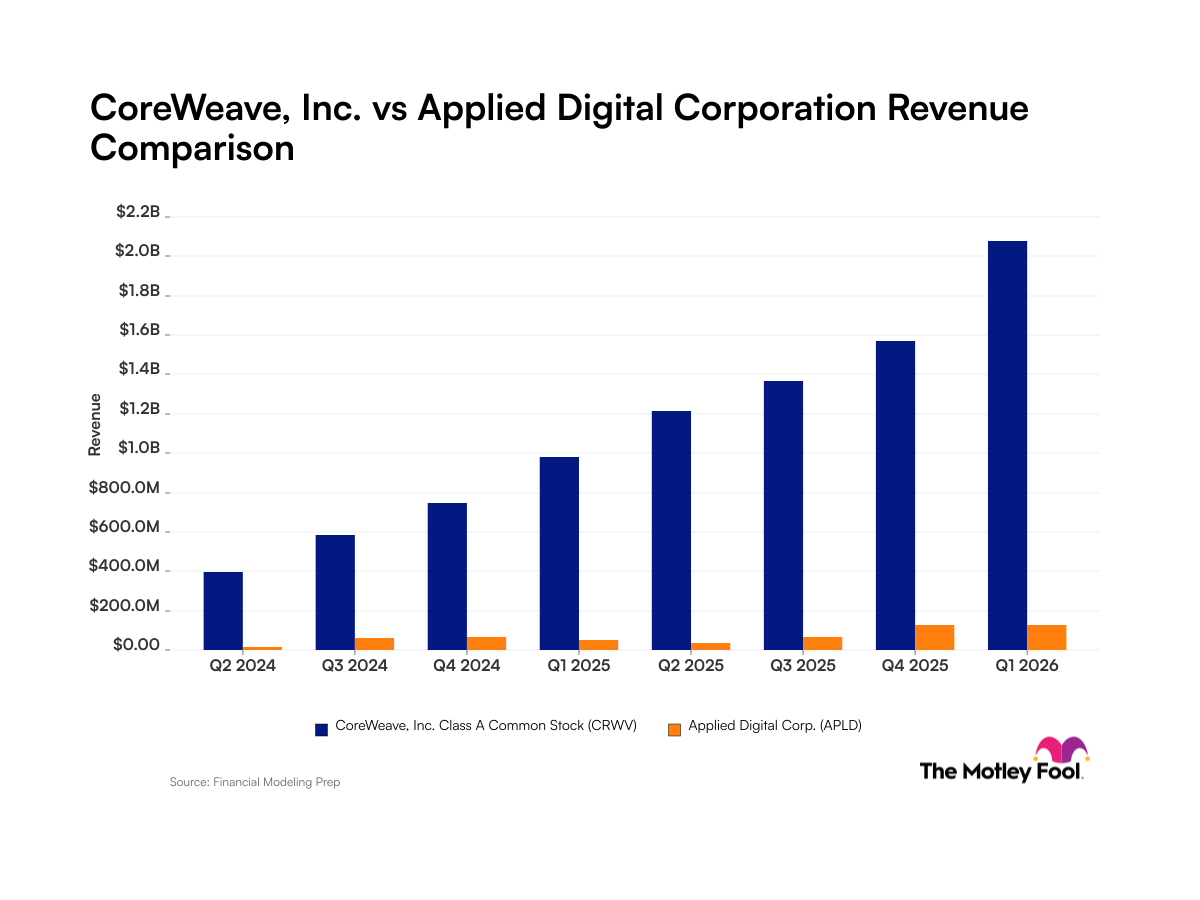
CoreWeave vs. Applied Digital: Evaluating Disparities in Revenue Scale for These Artificial Intelligence Companies
CoreWeave demonstrates significantly stronger revenue growth than Applied Digital, with Q1 2026 revenue exceeding $2 billion compared to Applied Digital's $126.6 million. While CoreWeave shows consistent quarter-over-quarter expansion driven by AI computing demand and a $100 billion backlog, both companies face challenges from high debt loads ($25 billion and $2.6 billion respectively) that have pressured share prices. CoreWeave trades at a lower price-to-sales ratio of 6, while Applied Digital's valuation multiple of 21 appears expensive relative to its more modest growth trajectory.
Trump Media Settles Legal Disputes
Trump Media and Technology Group Corp. (DJT) announced the mutual resolution of all claims between the company, Patrick Orlando, and ARC Global Investments II LLC through a confidential settlement agreement. The resolution concludes disputes among these parties.

Cathie Wood Is Selling This High-Flying Stock. Is It a Buy?
Cathie Wood's Ark ETFs sold over $11 million worth of Twist Bioscience stock on June 30, 2026, despite the synthetic DNA manufacturer's stock climbing 190% year-to-date. The sales appear to be portfolio rebalancing rather than a loss of confidence, as Ark still holds over $332 million in Twist across its ETFs. The proceeds were used to purchase stakes in other companies like Circle Internet Group and SoFi Technologies.
Griffin Global Asset Management Announces the Delivery of the First of Six Boeing 737 MAX 8 Aircraft on Long-Term Lease to VietJet Group
Griffin Global Asset Management has delivered the first of six Boeing 737 MAX 8 aircraft on long-term lease to VietJet Group. The deal supports VietJet's fleet modernization and expansion strategy with fuel-efficient aircraft.
Bronstein, Gewirtz & Grossman LLC Urges Peabody Energy Corporation Investors to Act: Class Action Filed Alleging Investor Harm
A class action lawsuit has been filed against Peabody Energy Corporation for allegedly making false statements about the Centurion mine's commissioning status and financial impact. The company claimed the project was 'on time and on budget' while concealing significant operational challenges. Following disclosures in March and May 2026, BTU stock declined approximately 37%, from $39.50 to $25.00 per share. Investors who purchased securities between October 14, 2024 and May 4, 2026 may be eligible to join the lawsuit.
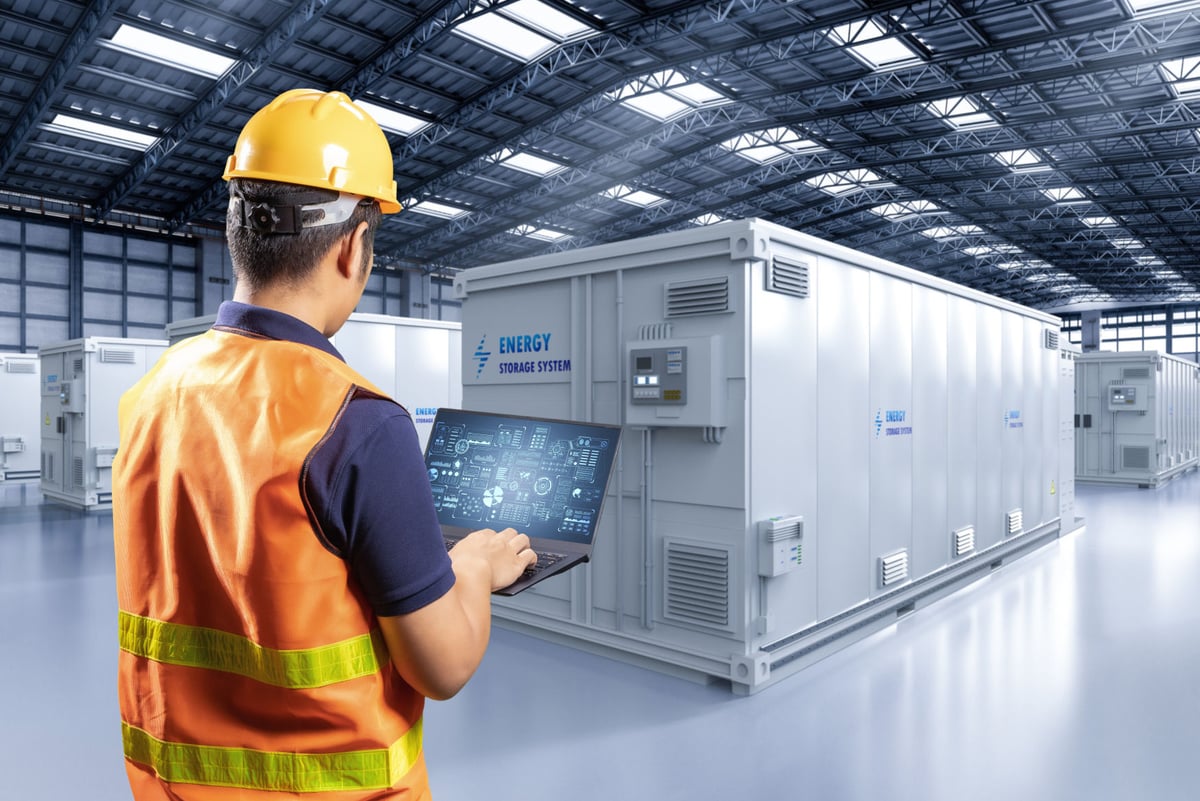
I'm Calling It: Bloom Energy Will Be a Very Different Stock After 2026 for 1 Reason
Bloom Energy is positioned to transform as hydrogen fuel cells gain mainstream adoption for powering AI data centers. Major deals with Oracle, Brookfield, and others signal the fuel cell industry is reaching a critical tipping point, with the market expected to grow 37% annually through 2031. Despite a 40% decline from June peaks, the company's profitability and unique multi-fuel technology make it well-positioned for future growth.

Bill Gates' Foundation Was Snubbed by Warren Buffett for the First Time in 20 Years. Buffett Is Now on Track to Offload His Entire $140 Billion Berkshire Stake by 2034.
Warren Buffett has redirected his charitable giving away from the Bill Gates Foundation for the first time in 20 years, instead donating his $140 billion Berkshire Hathaway stake to foundations run by his children by 2034. This shift could have significant implications for Berkshire's future operations, potentially leading to dividend payments to support the foundations' philanthropic goals, which may differ from Buffett's traditional reinvestment strategy.
Grab CFO Peter Oey Sells 50,000 Shares
Grab Holdings Limited CFO Peter Oey sold 50,000 Class A Ordinary Shares on July 15 for approximately $191,500, leaving him with 6.9 million shares worth $26.4 million. The sale was executed under a 10b5-1 trading plan, which pre-establishes transaction timing to avoid any appearance of trading on material non-public information. Similar share sales by CEO Anthony Tan and CPO Philipp Kandal in July were also conducted under 10b5-1 plans. Grab's stock has underperformed the broader market, declining 33.2% over the past year.
1 Overlooked Vanguard ETF Is Outpacing the S&P 500 This Year at a Bargain Cost
The Vanguard Small-Cap Growth ETF (VBK) is outperforming the S&P 500 with small-cap stocks up 21.4% year-to-date versus the S&P 500's 9.5% gains. The ETF holds 544 stocks with a low 0.05% expense ratio, making it an attractive option for risk-tolerant long-term investors seeking small-cap growth exposure without excessive volatility.

Warren Buffett Set a New Goal: Give Away All of His $140 Billion Berkshire Stake by 2034
Warren Buffett announced plans to donate his entire $140 billion fortune to charity by December 31, 2034, accelerating his philanthropic efforts. This week, he converted 8,000 Berkshire Hathaway Class A shares into 12 million Class B shares to donate to four foundations tied to his family, with approximately $17 billion per year in grants required to meet the 2034 deadline. The donations will be distributed gradually over eight years to minimize stock price volatility.
GEnx-1B Engines Surpass 50 Million Flight Hours
GE Aerospace announced that its GEnx-1B engine has reached 50 million flight hours in just over 14 years, the fastest rate for any GE commercial widebody engine. The engine powers Boeing 787 Dreamliners and maintains a 99.98% dispatch reliability rate. GE Aerospace is investing $1 billion in U.S. manufacturing and supply chain enhancements to meet growing demand.

Here's What Reddit CEO Steve Huffman's Sale of Company Shares for $3.6 Million Means for Investors
Reddit CEO Steve Huffman sold 18,000 shares worth $3.6 million on July 15, 2026, through a pre-planned Rule 10b5-1 trading plan adopted over a year prior. Despite the sale, Huffman maintains substantial holdings of over 450,000 indirect shares and 1.1 million derivative securities, indicating continued alignment with shareholders. The transaction should not concern investors as it was non-discretionary and follows standard executive practice.
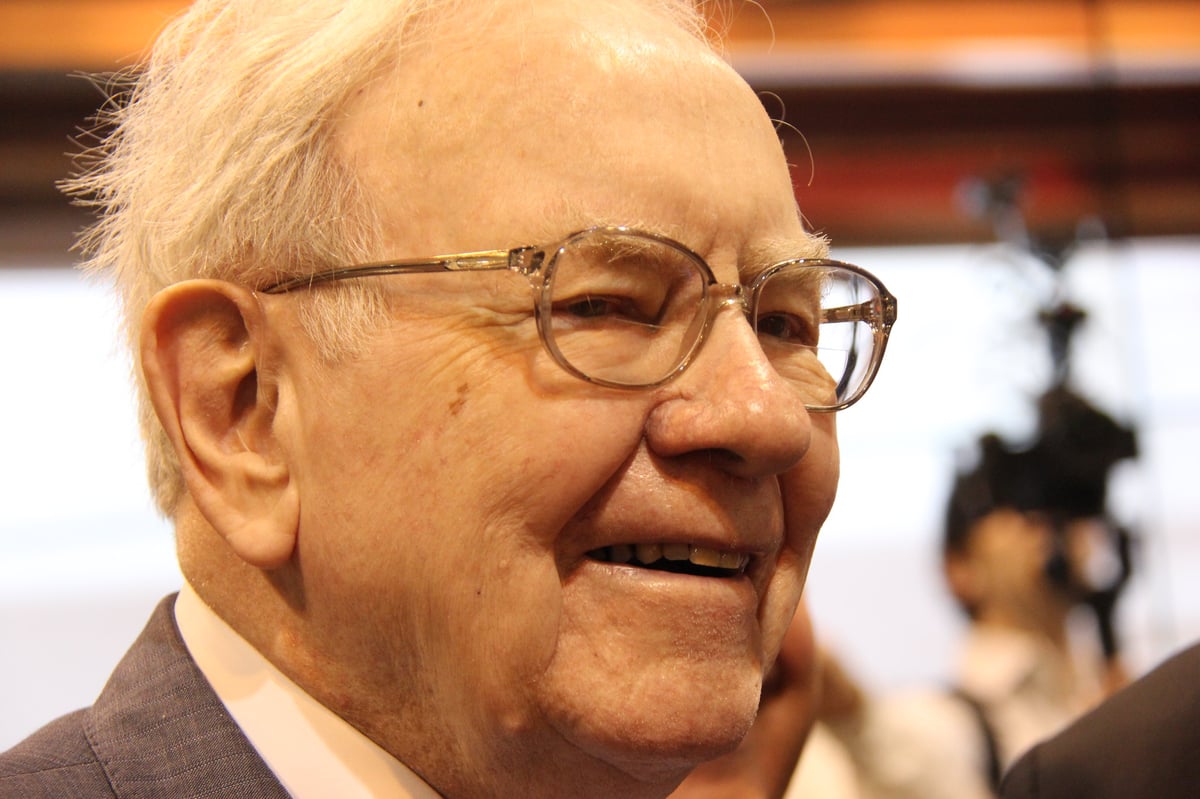
Warren Buffett Is Behind Berkshire Hathaway's Massive Alphabet Investment. Here's What He Likes About the Company.
Warren Buffett confirmed he initiated Berkshire Hathaway's $4 billion investment in Alphabet, with CEO Greg Abel adding another $23 billion. Buffett, who historically avoided tech stocks, changed his mind because Alphabet has become a massive cash-generating machine with the ability to deploy hundreds of billions into AI data centers. Alphabet's full-stack cloud approach, custom TPU chips, and $462 billion in contracted revenue make it well-positioned to generate strong returns on capital.

2 Passive Income Stocks I Plan to Hold for the Next Decade
The author recommends Brookfield Renewable and Realty Income as core passive income holdings for the next decade. Both companies offer high dividend yields (4.5%+ and 4.9% respectively), strong dividend growth track records, stable financial profiles, and significant growth potential. Brookfield Renewable benefits from renewable energy development projects and contracted cash flows, while Realty Income leverages private capital partnerships and a large addressable market in net-lease real estate.
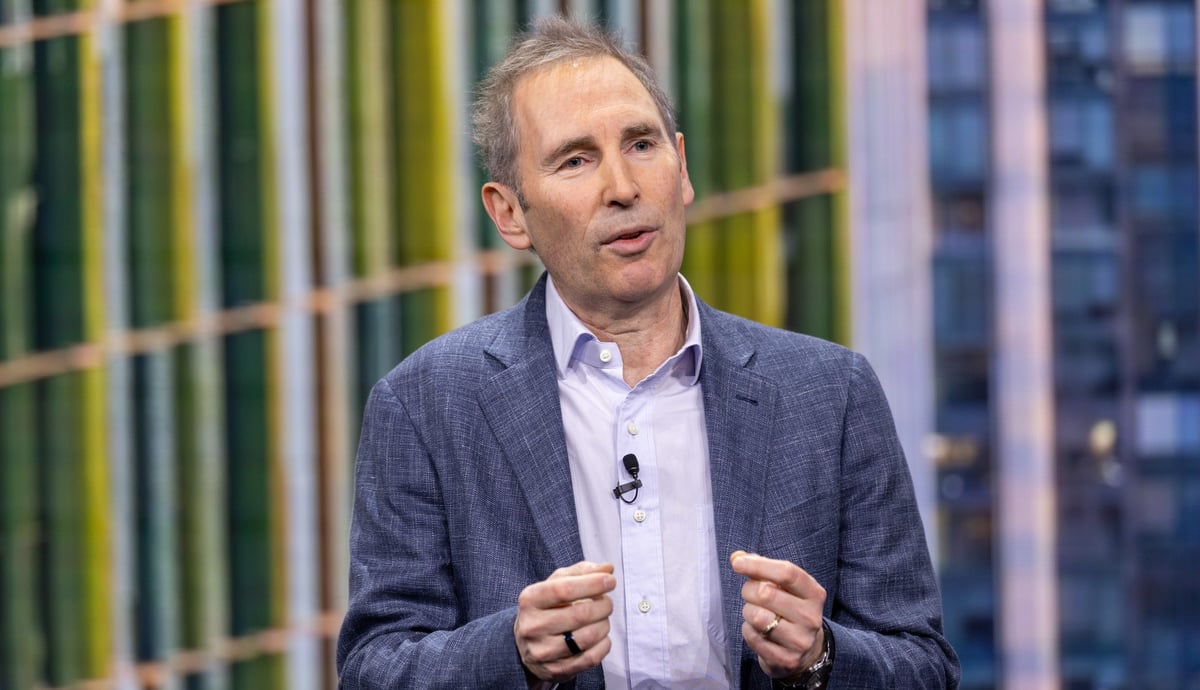
Andy Jassy Said Amazon Isn't Investing $200 Billion in AI "On a Hunch." Amazon's Own Trainium Chip Business Is Already Running at a $20 Billion Annual Pace.
Amazon's $200 billion AI investment is backed by strong fundamentals, including its Trainium chip business running at a $20 billion annual revenue pace with $225 billion in pre-committed customer contracts. The custom chip operation is growing at triple-digit percentages and offers better performance-per-dollar than competitors, allowing Amazon to build a more controlled and cost-efficient AI supply chain.
What to Know About ServiceTitan's CFO Sherry David Selling 2,276 Shares for $181,000
ServiceTitan's CFO Sherry David sold 2,276 shares for approximately $181,000 on July 15, 2026, under a pre-scheduled Rule 10b5-1 trading plan established in January 2026. Despite the sale, David retains 395,756 shares worth $31.01 million. The transaction is viewed as routine portfolio management rather than a bearish signal, as the company continues to grow sales by 25% quarterly while improving margins despite AI-related market concerns.

Alphabet vs. Apple: Which Warren Buffett Favorite Is the Better Stock to Buy Today?
Warren Buffett holds positions in both Apple and Alphabet. While Apple has an excellent business model with its closed-loop ecosystem and high-margin services, its valuation is stretched at a forward P/E of 35x. Alphabet, trading at a forward P/E below 25x, offers better value with strong AI capabilities, custom TPU chips, and significant growth opportunities, making it the better buy currently.

2 Stocks That Could Double by 2030
The article highlights MercadoLibre and Dutch Bros as two non-AI growth stocks with potential to double by 2030. MercadoLibre, a Latin American e-commerce and fintech leader, is growing at 49% year-over-year with plans to launch a digital bank in Mexico. Dutch Bros, a coffee chain, plans to nearly double its store count from 1,177 to 2,029 shops by 2029 with 31% year-over-year revenue growth.

Even With Tesla Under $400, I'd Still Rather Buy This Unstoppable Growth Stock in July
Despite Tesla's stock price dropping below $400, the author recommends Cava Group as a better investment choice. Tesla faces concerns over shrinking profit margins, declining North American sales, and a valuation heavily dependent on unproven autonomous driving technology. Cava, a fast-growing Mediterranean restaurant chain, offers more reliable growth through strong customer traffic, profitable expansion, and a clear path to 1,000 locations by 2032.

Under Greg Abel, Apple and Alphabet Now Make Up Nearly 30% of Berkshire Hathaway's $348 Billion Stock Portfolio. Here's Why.
Under new CEO Greg Abel, Berkshire Hathaway has significantly concentrated its $348 billion stock portfolio in Apple (20.6%) and Alphabet (8.8%), reflecting a strategic shift toward AI-driven tech companies. Abel tripled Berkshire's Alphabet position, including a $10 billion private placement to fund the company's $80 billion AI infrastructure expansion. While this concentration signals confidence in these companies' AI prospects and their durable competitive moats, it also increases portfolio risk if either company stumbles or AI investments fail to deliver expected returns.
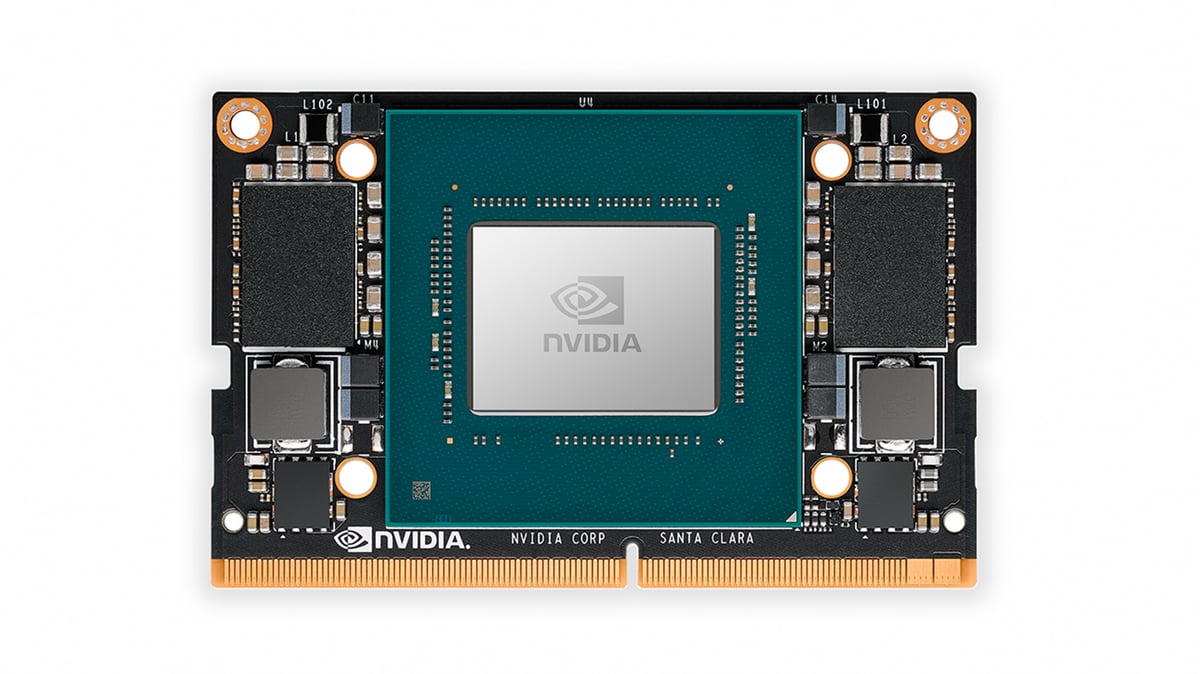
Can Nvidia Become a $10 Trillion Stock by 2030?
Nvidia, currently valued at $5 trillion, could potentially double to $10 trillion by 2030 based on accelerating revenue growth (85-96% YoY) and dominant 80-90% market share in AI chips. However, the stock trades at a premium 20x price-to-sales ratio that would likely compress as growth inevitably slows, making the $10 trillion valuation dependent on maintaining 40-50% CAGR and a lower valuation multiple.

CrowdStrike vs. Snowflake: Which Technology Stock Is a Better Buy in 2026?
CrowdStrike and Snowflake are compared as AI-driven enterprise software leaders. CrowdStrike offers cloud-native cybersecurity with a recurring subscription model, reporting ~21.7% revenue growth and near-profitability. Snowflake provides an AI Data Cloud platform with a consumption-based model, showing ~29.2% revenue growth but deeper losses and higher debt. The article recommends CrowdStrike for 2026 due to its more stable recurring revenue model and profitability, despite both trading at premium valuations.

Mark Zuckerberg's Meta and Other Hyperscalers Face a Major Bottleneck. Here Are 2 Industrial Stocks That Will Benefit
As Meta and other tech giants rapidly expand AI data center capacity, industrial suppliers Caterpillar and Eaton are experiencing significant growth. Caterpillar's backlog reached a record $63 billion (up 79% year-over-year) driven by demand for earth-moving equipment and power generators, while Eaton's Americas division backlog grew over 40% with order growth at 60%, fueled by AI infrastructure demand. Both companies are well-positioned to benefit from the ongoing data center construction boom, though their valuations are elevated at 45x and 38x P/E ratios respectively.

IHE vs IXJ: Which Popular Healthcare ETF Is the Better Buy for Investors?
The article compares two healthcare ETFs: IHE (U.S. Pharmaceuticals) and IXJ (Global Healthcare). IHE offers concentrated exposure to 56 U.S. pharmaceutical companies with higher recent returns (50.30% 1-yr), but carries significant concentration risk with its top two holdings (J&J and Eli Lilly) comprising 43% of the portfolio. IXJ provides broader diversification across 110 international healthcare companies including medical devices and services, with lower concentration risk but more modest recent returns (18.20% 1-yr). The article suggests IXJ is better for diversification-focused investors, while IHE's outperformance is largely driven by GLP-1 weight-loss drug success.
How Buying SpaceX Today Could More Than 10X Your Net Worth
SpaceX could deliver a 10x return if annual revenue reaches $3.6 trillion by 2040, aligning with Morgan Stanley's $3.4 trillion projection. Currently trading at $1.8 trillion market cap with $18.7 billion in 2025 revenue, the company would need a 5x price-to-sales ratio to reach an $18 trillion valuation. However, this scenario depends on successful execution of Starlink, Starship, and AI segments, with significant downside risk if any underperforms.

Meta Platforms Is Up 21% This Month, and Here Is What's Driving the Surge
Meta shares surged 21% in July, adding $270 billion to its market cap, driven by the launch of its new cloud computing division under the Meta Compute initiative. The company plans to monetize excess AI infrastructure by selling unused compute resources to outside customers, addressing concerns about aggressive AI spending ($125-145 billion annually). Investors are optimistic about this strategic pivot to generate returns on massive capex investments, though the company's ability to deliver on AI ROI expectations remains critical.
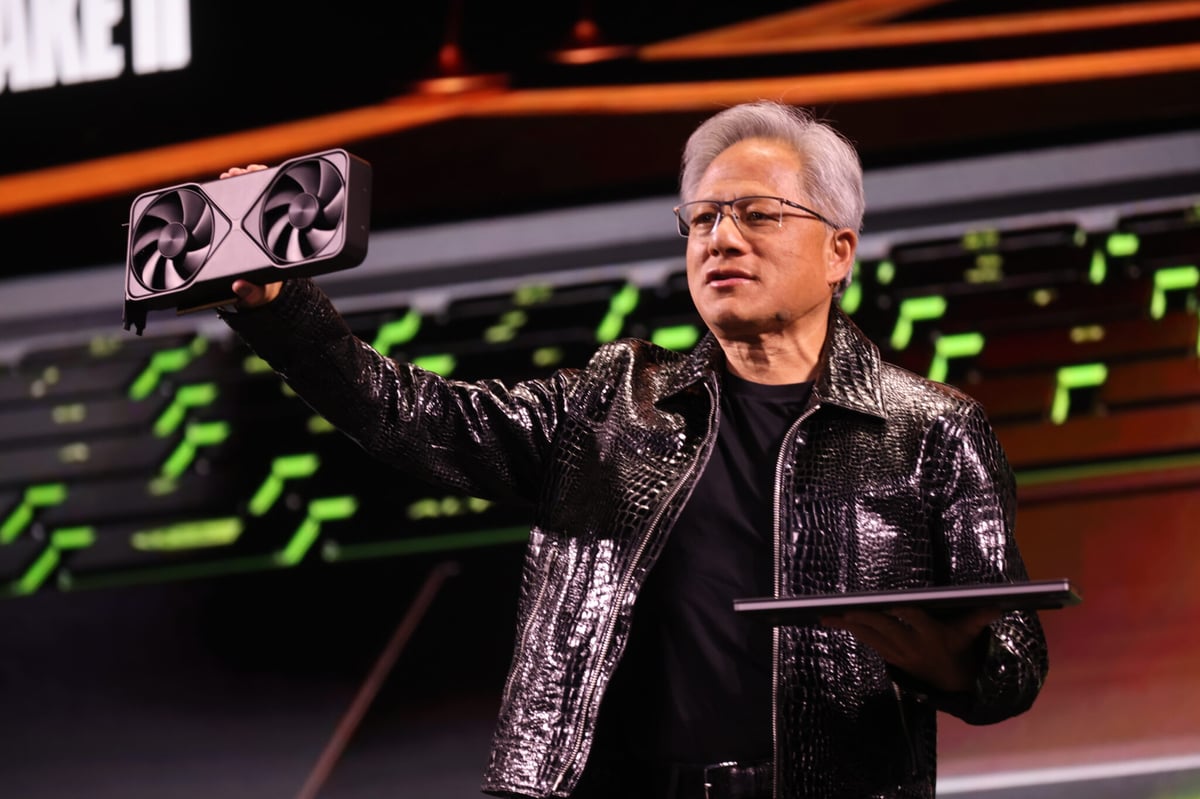
Jensen Huang Told CES 2026 That Memory Is Now the Biggest Bottleneck in AI. Micron and Sandisk Have Outperformed Nvidia's Stock Ever Since.
Nvidia CEO Jensen Huang highlighted at CES 2026 that memory is becoming the critical bottleneck in AI development as large language models require increasing storage capacity. Memory and storage chip manufacturers Micron Technology and Sandisk have significantly outperformed Nvidia's stock since then, with both companies reporting surging revenues driven by AI infrastructure demand. Both companies are securing long-term customer contracts worth billions to stabilize their typically cyclical business.
4DMT Announces Positive 2-Year Data from PRISM Phase 2b Clinical Trial in a Broad Wet AMD Population
4D Molecular Therapeutics (4DMT) announced positive 2-year results from its PRISM Phase 2b clinical trial of 4D-150, an intravitreal gene therapy for wet age-related macular degeneration (AMD). The single-dose treatment demonstrated consistent maintenance of visual acuity and anatomic control with 78-87% reduction in treatment burden compared to standard aflibercept injections. The therapy was well-tolerated with no new safety concerns or intraocular inflammation cases beyond the first 6 months.
2 Vanguard ETFs Using Momentum to Outpace the S&P 500
Two Vanguard ETFs are outperforming the S&P 500 this year: the Information Technology ETF (VGT), up 21% driven by semiconductor companies benefiting from AI demand, and the Energy ETF (VDE), benefiting from Middle East conflicts and elevated energy prices. Both ETFs are concentrated in top holdings but positioned to finish ahead of the S&P 500.
What Does the C3.ai CEO's Sale of Company Shares Worth $4.2 Million Mean for Investors?
C3.ai CEO Thomas Siebel sold 462,565 shares worth $4.2 million on July 14-15, 2026, exercising options at $3.90 and selling at $9.18 per share. The sale was part of a pre-scheduled Rule 10b5-1 trading plan adopted in September 2024 and does not indicate insider concern, as Siebel retains ~2.9 million shares and options. The stock has declined 66% over the past year, though Siebel's return as CEO following health-related absence may help the company rebound from a significant revenue drop.
2,300+ cyclists pedal to a record-breaking $12.5M for Alberta cancer care
Breast cancer patient Heidi Panych is participating in the 2026 Enbridge Tour Alberta for Cancer to share her story. The event attracted a record 2,300 cyclists and raised $12.5 million for cancer research and patient support programs in Alberta. Team Enbridge has collectively raised over $10 million since the company became title sponsor in 2010.

Go Big or Go Bigger: Is the Vanguard Mega Cap Growth ETF or S&P 500 Growth ETF the Better Buy?
Vanguard S&P 500 Growth ETF (VOOG) is recommended over Vanguard Mega Cap Growth ETF (MGK) for long-term investors. While MGK offers a slightly lower expense ratio of 0.05% versus VOOG's 0.07%, VOOG's broader diversification across 148 holdings versus MGK's 56 holdings has delivered superior returns across most time periods, with VOOG returning 22.80% over one year compared to MGK's 18.80%.

This "Hands-Off" ETF Could Be Your Ticket to Becoming a Millionaire
The Vanguard S&P 500 ETF offers a simple, low-cost way to build wealth through consistent long-term investing in 500 large U.S. companies. With a 0.03% expense ratio and historical 15% average annual returns, investing $500 monthly could yield $1.36 million over 30 years. However, investors should be aware of market volatility, tech sector concentration, and the need for patience and a diversified portfolio strategy.
UFC Names Meridian Holdings Official Sponsor of Fight Night Belgrade
Meridian Holdings Inc. (NASDAQ: MRDN) announced that its subsidiary Meridianbet has been named the Official Sponsor of UFC Fight Night Serbia, scheduled for August 1, 2026 at Belgrade Arena. This marks the first UFC event ever held in Serbia, with Meridianbet serving as the exclusive sports-betting category sponsor. The sponsorship includes Octagon branding, marketing placements, and digital campaigns across UFC's global platforms.
Better Buy: SK Hynix vs. Micron
SK Hynix, now trading on U.S. exchanges via ADR, is compared to Micron as a memory chip investment. SK Hynix leads the HBM market with 56% share and has a strategic partnership with Nvidia, while Micron has a longer track record but entered HBM later. Both companies are benefiting from strong AI infrastructure demand, though the volatile memory chip market poses risks. The article recommends SK Hynix for new investments despite Micron's lower valuation.

Pfizer Paid Out $14.6 Billion in Dividends Over the Last 18 Months. Can It Keep This Up Through the Patent Cliff?
Pfizer's attractive 7% dividend yield masks significant risks as the company faces a patent cliff with major drugs losing protection in 2027-2028. With a dividend payout ratio over 130% and limited new drug candidates in the pipeline, investors are concerned about the sustainability of the dividend. However, the company has cash reserves and debt options to maintain payments, and management has prioritized dividend preservation.

An Oceaneering Insider Sold 7,000 Company Shares. Here's a Closer Look at the Transaction.
Deanna Goodwin, a Board of Directors member at Oceaneering International, sold 7,000 shares (~$285,000) on July 1, 2026, at $40.69 per share, reducing her direct holdings by 16.32%. The sale occurred near recent highs as the stock was up 80.84% over one year. Despite the sale, Goodwin retained nearly 36,000 shares, suggesting continued confidence in the company's long-term prospects amid strong business developments including $1 billion in customer orders.
This Dividend ETF Yields 3.2% and Is Beating the Nasdaq-100 This Year
The Schwab U.S. Dividend Equity ETF (SCHD) has returned approximately 20% in 2026, outperforming both the S&P 500 and Nasdaq-100. The $95 billion fund focuses on companies with at least 10 consecutive years of dividend payments and screens for quality fundamentals. Its concentration in healthcare and consumer staples has benefited from a market rotation away from expensive AI and software stocks, though the fund's long-term job is delivering growing income from durable businesses rather than outrunning growth indexes.

SpaceX's Unlucky Flight 13 Fails to Launch Starship. Can the Stock Survive Yet Another Delay?
SpaceX's Starship Flight 13 test launch was scrubbed when four Raptor engines failed to ignite at liftoff. The company faces mounting pressure from a 2028 NASA deadline for lunar missions and competition from Blue Origin. SpaceX stock has declined 38% from its all-time high, with investors bracing for continued volatility as the company pursues further test flights.
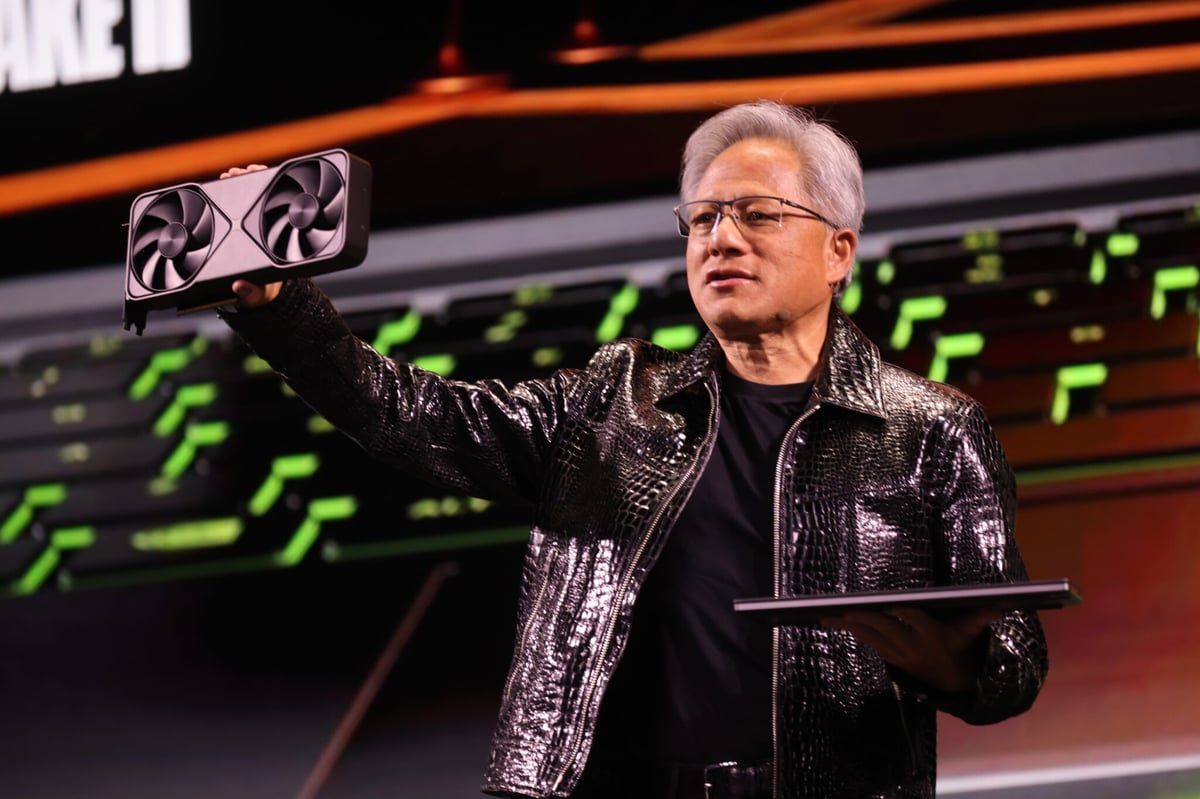
Jensen Huang Said Nvidia Will Be the First Customer for HBM4. Here's the AI Memory Stock That Has Reportedly Locked Up 70% of Those Orders.
As AI workloads scale, high-bandwidth memory (HBM4) has become a critical bottleneck. Nvidia CEO Jensen Huang confirmed Nvidia will be the primary customer for HBM4 solutions to power its next-generation Vera Rubin architecture. SK Hynix has emerged as Nvidia's preferred partner, reportedly securing 50-70% of anticipated HBM4 orders through a multiyear co-development partnership announced in June, positioning it as a major beneficiary of the memory supercycle.

Can Starbucks Continue Obliterating Dutch Bros in the Second Half?
Starbucks has reversed its fortunes in 2026 through CEO Brian Niccol's 'Back to Starbucks' turnaround plan, featuring improved staffing, faster service, and renewed focus on in-store experience, resulting in positive comparable sales and recovered morning traffic. Dutch Bros' stock has pulled back despite strong 30%+ revenue growth and aggressive expansion plans, representing a valuation reset rather than business deterioration. For the second half of 2026, Starbucks appears the steadier near-term investment with dividend income and international growth potential, while Dutch Bros offers higher long-term upside for patient investors willing to accept volatility.

Not Sure Which Stocks to Buy? This Vanguard ETF Makes It Simple.
The article advocates for passive index investing through the Vanguard Total Stock Market ETF (VTI) rather than individual stock picking. VTI provides broad exposure to 3,500+ U.S. stocks with a low 0.03% expense ratio, allowing investors to participate in overall market growth without the difficulty and risk of selecting individual winners.

Warren Buffett's Top Rule for Dealing With a Stock Market Crash
Warren Buffett's approach to stock market crashes centers on three key principles: recognizing that markets always recover to new highs, maintaining patience rather than panic-selling, and aggressively buying quality stocks at discounts when opportunities arise. Buffett's success stems from confidence in eventual market recovery and a long-term investment horizon, contrasting with most investors who move to cash during downturns and gradually re-enter after recoveries are obvious.

Prediction: SpaceX Stock Could Be Worth $5 Trillion or More If This 1 Thing Happens
SpaceX could potentially reach a $5 trillion market cap if its Starmind initiative succeeds in processing AI workloads in space using a constellation of up to 1 million satellites. The company's space-based AI processing offers advantages like free solar power and lower cooling costs compared to terrestrial data centers. However, significant technological hurdles remain and investors may need to wait years for this vision to materialize.
SpaceX Stock Is Down 45% From Its Peak. Should Investors Buy the Dip or Run for the Hills?
SpaceX stock has declined 45% from its peak of $225.64 to $125, despite strong revenue growth projections and expansion into AI infrastructure. While Wall Street forecasts revenue could double to $39.2B in 2026 and reach $72.7B in 2027, the company trades at a P/S ratio of 88—14 times higher than the Nasdaq-100. Even accounting for future growth, SpaceX remains significantly overvalued and unprofitable, suggesting further downside risk.
Has Nvidia Become a Value Stock?
Nvidia has emerged as a dominant force in the AI revolution with record revenues and profits, yet trades at a surprisingly low valuation compared to peers. With a forward P/E ratio of 23—between typical growth (29) and value (17) stocks—Nvidia appeals to both growth and value investors. The company's strong competitive position, established track record, and early-stage AI market opportunity make it an attractive long-term holding, though cautious investors should note risks from high AI spending levels and sector volatility.

Warren Buffett Is Disposing of His Berkshire Shares. Here's How.
Warren Buffett announced plans to dispose of all his Berkshire Hathaway shares within approximately eight years, accelerating his previous pledge to gradually give away his stock to philanthropic foundations. His remaining shares will be donated to four foundations, including three run by his children and one dedicated to his late wife. Buffett also halted his annual donations to the Gates Foundation due to concerns about Microsoft founder Bill Gates' interactions with disgraced financier Jeffrey Epstein.
Some of Berkshire's Newest Bets Aren't American. Greg Abel Bought 3 Japanese Trading Houses Last Quarter.
Under new CEO Greg Abel, Berkshire Hathaway has increased its stakes in three Japanese trading houses—Mitsubishi, Sumitomo, and Marubeni—during Q2 2026. Berkshire's combined five trading house positions, worth $35.4 billion (up from $23.5 billion a year prior), generate $862 million in annual dividends and are funded with cheap yen-denominated debt at 1.2% interest, creating an attractive 5.6% yield on original cost.
3 Undervalued Dividend Stocks You Can Buy and Hold Forever
The article discusses three undervalued dividend stocks suitable for long-term buy-and-hold investing strategies. It emphasizes that investing in dividend stocks is an excellent way to generate passive income and requires a different mindset compared to short-term trading.
WeRide Named Among China's Top 10 AI Case Studies for UAE Autonomous Driving Deployment, the Only Autonomous Driving Company Recognized
WeRide has been recognized as one of China's top 10 AI case studies for its autonomous driving deployment in the UAE, the only autonomous driving company on the list. The company operates fully driverless Robotaxi services across Abu Dhabi, Dubai, and Ras Al Khaimah through Uber, and has expanded to additional markets including Riyadh, Singapore, Madrid, and Zurich, with operations in over 40 cities across 12 countries.

AST SpaceMobile Nears Commercial Launch: Is It Time To Buy The Dip?
AST SpaceMobile is preparing to launch commercial satellite-based broadband services in early 2027, differentiating itself from Starlink through partnerships with major telecom providers like AT&T and Verizon. The company generated $15M in Q1 2026 revenue and projects $1B annual revenue post-launch, but faces execution risks. The stock has declined nearly 60% from recent highs, making it suitable only for aggressive investors willing to wait for proof of commercial viability.
BTU Stockholders Have Rights – If You Lost Money Investing in Peabody Energy Corporation Contact Robbins LLP for Information About Recovering Your Losses
A class action lawsuit has been filed against Peabody Energy Corporation (NYSE: BTU) on behalf of investors who purchased stock between October 14, 2024 and May 4, 2026. Shareholders allege the company misled investors about production rates at its Centurion mine, providing overly optimistic guidance that failed to materialize. The stock declined 9.7% on March 30, 2026 following a guidance cut, and another 5.7% on May 5, 2026 when the company disclosed failure to meet the mine's ramp-up deadline.

Etsy vs. Wayfair: Which Consumer Stock Is a Better Buy in 2026?
Etsy and Wayfair represent different e-commerce strategies in the discretionary spending market. Etsy maintains profitability with a 5.7% net margin and asset-light model, while Wayfair generates higher revenue ($12.5B vs $2.9B) but remains unprofitable with a -2.5% net margin. The article recommends Etsy for conservative investors seeking steady cash flow and Wayfair for aggressive investors betting on housing market recovery.
ROSEN, LEADING TRIAL ATTORNEYS, Encourages Genius Group Limited Investors to Secure Counsel Before Important Deadline in Securities Class Action Against Citadel Securities LLC and Virtu Americas LLC - GNS
A class action lawsuit has been filed against Citadel Securities LLC and Virtu Americas LLC for allegedly engaging in 'spoofing' - a manipulative trading practice involving submitting and cancelling orders without intent to execute them - to artificially influence the price of Genius Group Limited (GNS) securities between April 2022 and May 2025. The defendants allegedly profited by misleading market participants about supply, demand, and volatility while increasing transaction costs for investors. The lead plaintiff deadline is August 28, 2026.
International Business Machines Corporation (IBM) $68 Billion Wipeout Amid Z Shortfall Triggers Investigation - HBSS
IBM shares plummeted 25% on July 14, 2026, erasing $68 billion in market value after CEO Arvind Krishna revealed severe underperformance in Q2 2026 results, particularly in the IBM Z mainframe business. The company had previously assured investors of 5%+ revenue growth but delivered only 1% total revenue growth with a 7% decline in Infrastructure revenue. Hagens Berman is investigating potential securities law violations regarding whether IBM management knew about deal closures risks earlier.
Gold Miners or Silver Bars? We Compare VanEck Gold Miners ETF to iShares Silver Trust to Find the Better Buy
The article compares VanEck Gold Miners ETF (GDX) and iShares Silver Trust (SLV), two popular precious metals investment vehicles with different mechanics. While SLV provides direct exposure to physical silver bullion, GDX offers equity-based exposure to gold mining companies. Over five years, GDX delivered superior returns ($2,339 vs $2,196 on a $1,000 investment) with lower volatility. The article recommends GDX as the better buy, citing dividend income, favorable tax treatment compared to collectibles, and expectations for continued gold miner outperformance in 2026.

UiPath Vs. ServiceNow: Which Agentic AI Stock Is the Better Buy?
ServiceNow and UiPath are both positioned to capitalize on the growing agentic AI market, which is forecasted to grow at 46.2% CAGR through 2030. ServiceNow has faster revenue growth (22% YoY) and higher-paying customers, while UiPath recently achieved profitability and has better margin expansion potential. Both trade at similar P/E ratios, but UiPath offers better value for investors focused on margin improvement.
Iovance Biotherapeutics Reports Inducement Grants under NASDAQ Listing Rule 5635(c)(4)
Iovance Biotherapeutics announced the grant of inducement stock options covering 139,930 shares to seventeen new non-executive employees on July 16, 2026, with an exercise price of $4.66 per share and a three-year vesting schedule. The grants were made under the company's Amended and Restated 2021 Inducement Plan in compliance with Nasdaq Listing Rule 5635(c)(4).
PENTAIR INVESTIGATION ALERT: Bragar Eagel & Squire, P.C. is Investigating Pentair plc on Behalf of Pentair Stockholders and Encourages Investors to Contact the Firm
Law firm Bragar Eagel & Squire is investigating Pentair plc for potential securities law violations following the company's July 15, 2026 announcement of significantly lowered 2026 outlook, $170 million inventory destocking impact on Pool segment sales, and immediate CFO departure. Pentair's stock fell 15% ($11.35) to $64.33 per share on the news.

Dell Technologies vs. NVIDIA: Which Artificial Intelligence Stock Is a Better Buy in 2026?
Dell Technologies and NVIDIA represent different plays on the AI boom. Dell has surged over 200% in 2026 with strong server sales driven by AI adoption, while NVIDIA remains the dominant chip leader with superior financials and a 55.6% net margin. Though Dell appears cheaper on valuation metrics, NVIDIA is recommended as the better long-term investment due to its market leadership, CUDA software dominance, and stronger balance sheet.

ETFs Offer an Easier Way to Hold Physical Metal. Is Buying Gold or Silver the Better Bet in 2026?
The article compares two precious metals ETFs: SPDR Gold Shares (GLD) and ABRDN Physical Silver Shares ETF (SIVR). While GLD offers lower volatility with a 0.40% expense ratio, SIVR is more cost-effective at 0.30% and has outperformed gold over the past 1, 3, 5, and 10 years. The author recommends SIVR as the better buy for 2026, citing silver's higher industrial demand from renewable energy applications and superior long-term performance.
DBV Technologies dépose un prospectus relatif à son Programme At-The-Market (ATM) pour un montant pouvant atteindre 150 millions de dollars
DBV Technologies has filed a new S-3ASR registration statement with the SEC to renew its at-the-market (ATM) offering program for up to $150 million in American Depositary Shares (ADSs). The company plans to use proceeds primarily for manufacturing capacity expansion, pediatric BLA submissions for peanut allergy treatment, and product development. The program was established with Citizens JMP Securities as the placement agent.
Glencore Announces Amendment and Restatement of Convertible Facilities Agreement With Tantalex Lithium Resources Corporation
Glencore has amended and restated its convertible facilities agreement with Tantalex Lithium Resources Corporation, maintaining US$5 million in aggregate convertible term loan facilities. The agreement includes a 20% ownership cap on conversion, a 1% gross revenue royalty on tin, lithium, and tantalum production, and expanded offtake agreements covering tin and tantalum from the TiTan project in the Democratic Republic of the Congo.
Arizona Nonprofit Launches First-Ever Electric Vehicle Fundraiser Featuring the Iconic Volkswagen ID. Buzz
A Race Against Blindness, an Arizona-based nonprofit funding childhood blindness research, launched a two-week fundraiser (July 13-26, 2026) featuring a 2025 Volkswagen ID. Buzz 1st Edition 4MOTION and $20,000 in cash as the grand prize. The organization has granted over $6.1 million toward gene therapy research since its 2023 launch and aims to introduce supporters to electric vehicle benefits while advancing treatments for inherited retinal diseases.

SpaceX vs. Caterpillar: Which Stock Is a Better Buy in 2026, the Aerospace Innovator or the Construction Giant?
The article compares SpaceX and Caterpillar as investment options in 2026. SpaceX shows impressive 33.2% revenue growth but operates at a $4.9 billion net loss with negative $14 billion free cash flow, trading at a 197.7x forward P/E ratio. Caterpillar generates $10.3 billion in annual free cash flow with 13.1% net margins and trades at 34.7x forward P/E. The author recommends Caterpillar as the safer choice due to profitability, dividend payments, and exposure to AI-driven data center construction, while SpaceX represents a speculative bet on long-term space economy growth.
Willis appoints Lars Sorensen as Life Sciences Industry Leader for North America
Willis, a WTW business, announced the appointment of Lars Sorensen as Life Sciences Industry Leader for North America. Sorensen, who brings over 30 years of experience including his previous role as Life Sciences Industry Vertical Leader at Aon, will lead Willis' life sciences strategy, drive solution development, and serve as a subject matter expert. The appointment reflects Willis' continued investment in specialty talent and commitment to delivering differentiated solutions to clients in the life sciences sector.
KBWB vs. UYG: Which Financials ETF Is the Better Buy for Investors?
The Invesco KBW Bank ETF (KBWB) and ProShares Ultra Financials (UYG) offer different approaches to financial sector exposure. KBWB provides straightforward banking exposure with a 0.35% expense ratio and delivered a 39.43% one-year return, while UYG uses 2x daily leverage with a higher 0.94% expense ratio and returned 14.08% over the same period. KBWB is recommended for buy-and-hold investors, while UYG is better suited for short-term traders, though leveraged ETFs carry daily reset risks and tax inefficiency concerns.

SpaceX vs. AST SpaceMobile: Which Space Stock Will get Your Portfolio Into Orbit in 2026?
SpaceX and AST SpaceMobile are competing in the satellite communications space with different business models. SpaceX dominates rocket launches and operates Starlink with 10.3 million subscribers but faces massive capital requirements and negative free cash flow of -$14 billion in FY 2025. AST SpaceMobile is building a direct-to-device cellular network with partnerships from major carriers and expects profitability by 2027, though it currently has negative free cash flow of -$1.1 billion. The article recommends AST SpaceMobile as the better 2026 buy due to its more focused business plan and earlier path to profitability.
Malibu Boats Named a Finalist in 2026 Coolest Thing Made in Tennessee Contest
Malibu Boats, Inc. (MBUU) has been named a 2026 Coolest Thing Made in Tennessee finalist. The company, based in Loudon, Tennessee, is a leading designer and manufacturer of recreational powerboats across multiple brands including Malibu, Axis, Cobalt, Pursuit, and Saxdor. Public voting is open through July 29, 2026, with supporters able to cast one vote per day.
Wegovy Pill Just Changed the GLP-1 Market. Here's Why Eli Lilly Stock Could Still Win
Novo Nordisk's oral Wegovy launch has regained market share in the GLP-1 weight-loss drug market, capturing ~89% of oral weight-loss medication prescriptions in the U.S. However, Eli Lilly's Foundayo has potential advantages including fewer food restrictions and upcoming label expansions for multiple indications. Both companies remain well-positioned in the fast-growing anti-obesity market with strong pipelines.
Pinterest Director Benjamin Silbermann Sells $2.1 Million Stock
Pinterest co-founder and director Benjamin Silbermann sold 93,750 shares worth $2.1 million on July 14-15, 2026, reducing his indirect equity stake by 87% through a pre-planned Rule 10b5-1 trading arrangement. Despite maintaining over 1.2 million derivative securities, the large sale size and Pinterest's 35% stock decline over the past year amid advertising headwinds have raised investor concerns about confidence in the company.
FixGo Expands to San Diego with 20 New Partner Shops, Growing Its Southern California Network Past 200 Locations
FixGo, an online tire retailer, has expanded into San Diego County by adding 20 partner installation shops, bringing its total network to over 200 locations across Los Angeles and San Diego. The expansion allows customers to order tires online and arrange local installation with transparent, all-inclusive pricing.
NCLA Urges Supreme Court to Hear Vaccine Mandate Case that Clearly Misreads Precedent
The New Civil Liberties Alliance filed an amicus curiae brief with the U.S. Supreme Court in the Boysen v. PeaceHealth case, arguing that courts have misinterpreted the 1905 Jacobson v. Massachusetts decision to justify broad vaccine mandates. NCLA contends that Jacobson should only permit mandates when vaccines prevent disease transmission to third parties, and that lower courts have failed to protect individuals' liberty interests in refusing unwanted medical treatment.

Chevron Will Explore a Pipeline to Bypass the Strait of Hormuz. Here's What it Means for the Energy Stock.
Chevron has signed memorandums of understanding with Iraq to enter two major oilfields—the Nassiriya project (potential 600,000 barrels per day) and West Qurna 2 (460,000 barrels per day). The company is also evaluating pipeline routes to bypass the Strait of Hormuz, addressing export challenges caused by regional instability. These moves could significantly enhance Chevron's long-term growth prospects.
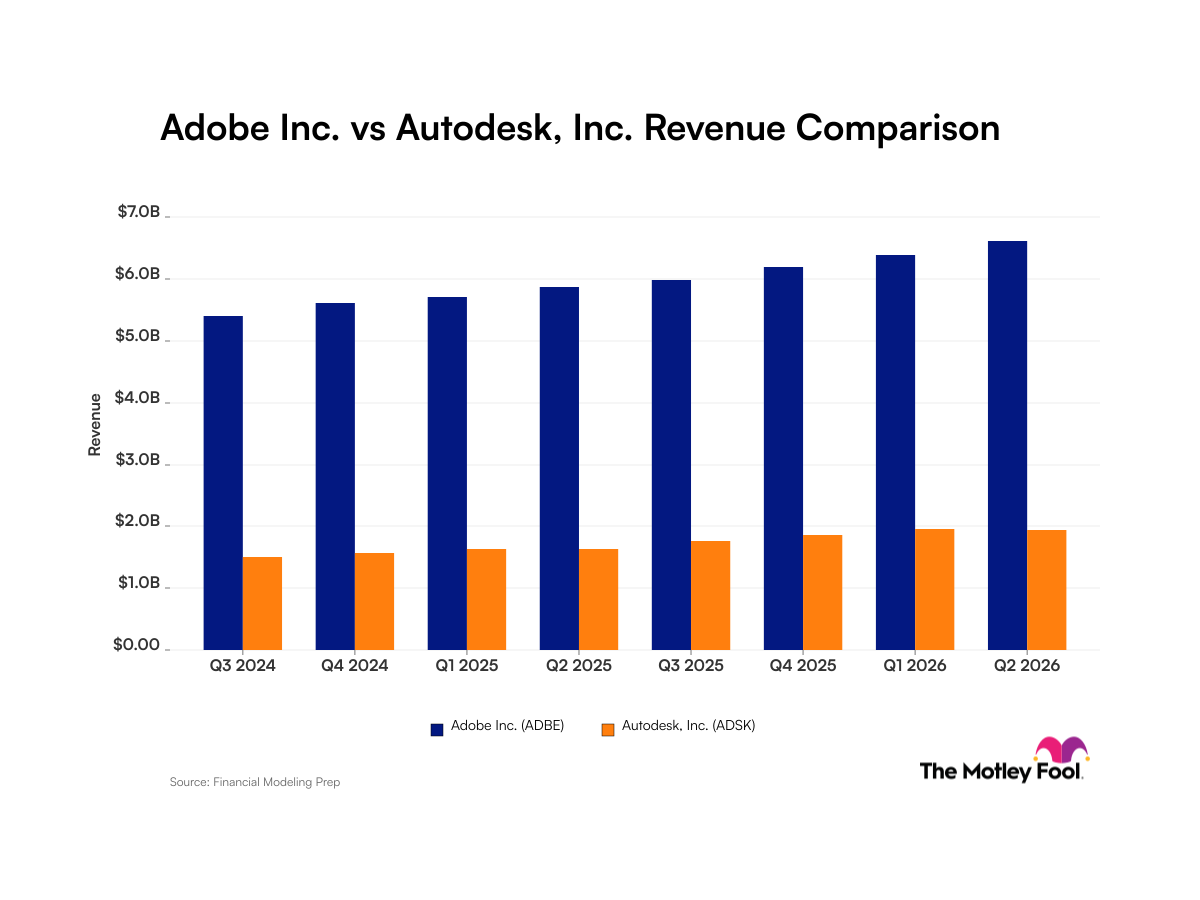
Adobe vs. Autodesk: What Revenue Trends Reveal About These Software Stocks
Adobe demonstrates stronger revenue momentum with eight consecutive quarters of growth, reaching $6.6 billion in Q2 2026, while Autodesk recorded its first revenue decline to $1.9 billion in Q2 2026 due to sales team reorganization. Despite leadership transitions at Adobe and market concerns about AI impact, the company maintains its competitive advantage with broader market reach compared to Autodesk's niche industry focus.
E.F. Hutton & Co. Serves as Exclusive Financial Advisor on Strategic Business Combination Between Glucotrack and Lōkahi Therapeutics and Exclusive Placement Agent for Approximately $5.7 Million Convertible Note Financing
E.F. Hutton & Co. served as exclusive financial advisor and placement agent for a strategic business combination between Glucotrack, Inc. and Lōkahi Therapeutics, along with a $5.7 million convertible note financing. The transaction creates a publicly traded healthcare platform combining Lōkahi's AI-driven asset sourcing capabilities with Glucotrack's Nasdaq listing, with Lōkahi becoming the operating company and Glucotrack's CBGM business continuing as a subsidiary.
Deadline Alert: Veritone, Inc. (VERI) Shareholders Who Lost Money Urged To Contact Glancy Prongay Wolke & Rotter LLP About Securities Fraud Lawsuit
Veritone, Inc. faces a securities fraud class action lawsuit after disclosing accounting errors related to revenue recognition under ASC 606. The company restated financial statements for Q3 2025, revealing overstated revenue and understated net losses due to misclassification of barter transactions and software valuation errors. The stock declined significantly following multiple disclosure announcements in March and April 2026. Investors have until July 20, 2026 to file a lead plaintiff motion.
Clariant rejects Dow Europe’s allegations against four companies related to the 2020 competition law infringement
Clariant received a EUR 1.1 billion damages claim from Dow Europe on July 16, 2026, related to alleged competition law infringement on the ethylene purchasing market sanctioned by the European Commission in July 2020. Clariant firmly rejects the allegations and states it has economic evidence that the conduct had no market effect.
Banco Comercial Português, S.A. informs about Interim report on the transactions conducted under the Share Buy-Back Programme
Banco Comercial Português, S.A. has released an interim report on its Share Buy-Back Programme transactions. Additionally, the bank has announced estimated provisions against legal risk related to its FX mortgage loans portfolio held by subsidiary Bank Millennium, S.A. in Q2 2026.

This Beaten-Down Aviation Stock Is Worth a Look Despite Its 46% Decline
Joby Aviation's stock has declined 47% year-to-date, but the article argues this presents a buying opportunity for long-term investors. Despite slow regulatory progress, Joby has made significant operational advances including thousands of test miles, strategic partnerships with Toyota, Delta, and Uber, and participation in a White House-backed eVTOL program. The author views the stock as a speculative long-term play with potential for substantial gains if the urban air mobility market reaches projected valuations.
Sandisk Has Surged More Than 3,000% in the Last 12 Months. Could a Stock Split Be Coming?
Sandisk stock has surged over 3,000% in the past 12 months, trading around $1,400 per share as of July 2026. While a stock split may seem likely, management may hold off due to strong investor demand, potential short-term trader influx, and the availability of fractional investing. The company's growth is driven by AI infrastructure demand, with data center revenue up 645% and edge business revenue up 295% in Q3 fiscal 2026. Long-term success depends on maintaining consistent revenues through multiyear contracts rather than expecting continued 3,000% annual gains.
Why Did Nvidia Stock Sink Today?
Nvidia stock dropped nearly 5% on Friday following news that Chinese startup Moonshot AI unveiled a new model that narrows the gap with top U.S. AI systems. The decline reflects investor concerns about lower-cost AI alternatives reducing capital spending on infrastructure. However, the article argues the reaction is overdone, noting Nvidia continues strong growth and recently announced expansion in Japan.
HBSS Alerts Roblox Corporation (RBLX) Investors to Expanded Class Period; Lead Plaintiff Deadline Remains August 7, 2026
Hagens Berman has expanded a securities class action lawsuit against Roblox Corporation, covering investors who purchased stock between October 31, 2024 and April 30, 2026. The litigation focuses on alleged misleading disclosures regarding user safety and the impact of age-check verification rollout, which resulted in a 16% stock decline and significant revenue guidance cuts.
SOITEC - HALF-YEAR STATEMENT ON THE IMPLEMENTATION OF THE LIQUIDITY CONTRACT AS OF JUNE 30, 2026
Soitec reports on its liquidity contract managed by BNP Paribas for the first half of 2026. During H1 2026, 227,346 shares were purchased for €17.36 million and 288,875 shares were sold for €23.29 million across 4,546 transactions. The liquidity account held 24,442 shares and €6.36 million as of June 30, 2026.
HUBG NOTIFICATION: HBSS Probing Claims Hub Group (HUBG) Made Material Financial Misstatements and Internal Control Failures; Securities Class Action Pending
Hub Group (HUBG) faces a securities class action lawsuit alleging material financial misstatements, improper revenue recognition, and internal control deficiencies spanning 2023-2026. The company revealed accounting errors totaling $77 million in 2025 and restated prior year financials, resulting in $890 million in market capitalization loss and executive departures.
2 Stocks to Buy in the Chip Stock Sell-Off
Following a chip stock sell-off on July 13 due to geopolitical tensions, the article recommends two semiconductor stocks for long-term investors: Nvidia, trading at attractive valuations relative to its GPU market dominance and AI infrastructure growth potential, and Marvell Technology, a leading ASIC maker positioned to benefit from increasing demand for custom AI chips from hyperscalers like Amazon and Alphabet.
VERI 3-DAY DEADLINE ALERT: Veritone, Inc. (VERI) Securities Class Action Filed After Admitting Improper Revenue Accounting – HBSS
Hagens Berman is investigating a securities class action against Veritone, Inc. (VERI) following the company's admission of materially misstated financial statements. The company improperly recorded revenue, overstated assets and accounts receivable, and maintained deficient internal controls during October 2025 to April 2026. Multiple disclosures in early 2026 caused significant stock declines, with the final disclosure on April 14, 2026 revealing errors in software valuation and revenue misclassification. Investors who suffered losses during the class period are eligible to serve as lead plaintiff with a July 20, 2026 deadline.
GRAL Investor Alert: HBSS Probes GRAIL, Inc. (GRAL) Following Securities Class Action Over Failed NHS-Galleri Trial
Hagens Berman is investigating GRAIL, Inc. for allegedly misleading investors about its NHS-Galleri cancer screening trial. The company failed to disclose that a three-year follow-up period was insufficient to meet the trial's primary endpoint. When GRAIL revealed the trial failure on February 19, 2026, its stock collapsed 50.55%, erasing $2.2 billion in market capitalization. The class action covers the period from May 13, 2025 to February 19, 2026, with a lead plaintiff deadline of August 4, 2026.
Unipart, KBR and IBM launch Team ORION to future-proof defence operations
Three industry leaders—Unipart, KBR, and IBM—have announced Team ORION, a joint venture to provide operational resilience, logistics, and technology solutions to the UK Ministry of Defence. The partnership combines Unipart's supply chain expertise, KBR's defence experience, and IBM's digital capabilities to create a sovereign, integrated defence support capability.
Patent Power, Graphene Leadership, and an $815 Million Infrastructure Win
Three companies announced significant developments in advanced materials and infrastructure: Xeriant secured a U.S. patent for its fire-resistant composite technology (NEXBOARD), Argo Graphene Solutions appointed graphene scientist Dr. Vikas Berry as CEO to accelerate commercialization of its STREAM platform, and Aecon Group and Southland Holdings won a C$815 million wastewater treatment contract in Winnipeg, expanding their infrastructure backlogs.
Compass Therapeutics Announces Tovecimig Data Accepted for an Oral Presentation at the ESMO Congress 2026
Compass Therapeutics announced that its abstract for tovecimig, a DLL4 x VEGF-A bispecific antibody, has been accepted for an oral presentation at the ESMO Congress 2026 in Madrid. The presentation will showcase Phase 2/3 COMPANION-002 trial results evaluating tovecimig combined with paclitaxel in patients with advanced biliary tract cancer, to be presented by Dr. Nilofer Azad from Johns Hopkins University on October 24, 2026.

Former Berkshire Hathaway CEO Warren Buffett Just Said 3 Words That Could Add Some Serious Fuel to the AI Trade
Warren Buffett revealed he personally initiated Berkshire Hathaway's significant investment in Alphabet, adding over $20 billion to the position in 2025. Buffett expressed regret for not buying earlier and highlighted Alphabet's strong returns on capital and diverse business portfolio as reasons for the investment, signaling cautious optimism toward AI despite concerns about massive capital expenditures required for AI infrastructure.

Why Shares of AST SpaceMobile Collapsed 25% This Week
AST SpaceMobile's stock plummeted 25% this week after the company announced a $1 billion convertible bond offering, surprising investors given its $3 billion cash balance. The company faces significant headwinds including $1.37 billion in annual cash burn, operational delays from Blue Origin launch failures, and a high conversion price of $79.60 versus the current $55 share price. Despite the decline, the stock remains expensive relative to fundamentals.
From Amazon #1 Bestseller to National Award Winner: Independent Author Noelle Hipke's Ascension Series Gains Momentum - HipKey TV Press Announces
Independent author Noelle Hipke's second book in the Ascension Series, 'Earth Games: Playbook Rules & Regulations,' won Silver in the 2026 COVR Visionary Awards. Her debut book 'Superpowers' achieved Amazon #1 bestseller status and multiple national literary awards. Hipke is completing the trilogy while seeking literary representation and publishing partnerships.
Military Drone (UAV) Market to Reach USD 22.81 Billion by 2030, Growing at 7.6% CAGR, Says MarketsandMarkets™
The global Military Drone (UAV) Market is projected to grow from USD 34.85 billion in 2026 to USD 109.22 billion by 2031 at a CAGR of 25.7%, driven by rising defense budgets, geopolitical tensions, and advancements in AI and autonomy. Strategic drones and ISR applications dominate the market, with North America leading and the Middle East & Africa showing fastest growth. Key players include Northrop Grumman, RTX, and General Atomics.
Financial Analytics Market Worth $36.10 Billion by 2035 as AI and Predictive Analytics Transform Enterprise Finance | Research by SNS Insider
The global financial analytics market is projected to grow from $12.15 billion in 2025 to $36.10 billion by 2035, driven by AI adoption, cloud computing, and predictive analytics. North America leads with 35% market share, while Europe and Asia Pacific show strong growth potential. Large enterprises dominate, but SMEs are expected to grow fastest due to affordable cloud-based solutions.
Muscle Stimulator Market Size to Reach USD 1,156.54 Million by 2035 | SNS Insider
The global muscle stimulator market is valued at $812.01 million in 2025 and is projected to reach $1,156.54 million by 2035, growing at a CAGR of 3.6%. Growth is driven by increasing adoption of neuromuscular electrical stimulation devices for pain management, rehabilitation, and sports medicine. TENS technology dominates with 67.4% market share, while portable devices account for 46.88% of the market. North America leads with 41.9% revenue share, while Asia Pacific registers the fastest growth.
Global Livestock Monitoring Market to Reach $10.3 Billion by 2030, Driven by Digital Agriculture Transformation
The global livestock monitoring market is projected to grow from $6.2 billion in 2025 to $10.3 billion by 2030 at a 10.6% CAGR, driven by AI-enabled precision farming, IoT sensors, and wearable technologies. Europe leads with 33.2% market share, while regulatory compliance and rising protein demand are key growth catalysts.
Atlas Healthcare Fund by VST Capital Entered Eli Lilly at $350 in 2020 — The Stock Now Trades Above $1,200
Atlas Healthcare Fund, managed by VST Capital, showcased its track record of early conviction investments in healthcare, with notable positions in Eli Lilly (entered at $350, now trading above $1,200), Alnylam Pharmaceuticals, TransMedics Group, and Inari Medical. The fund has delivered cumulative net returns of +1,720.9% since inception in January 2020, averaging over 57% annually, by identifying clinically differentiated technologies before mainstream market recognition.
American Critical Minerals to Present at the Precious Metals & Critical Minerals Virtual Investor Conference on July 23rd
American Critical Minerals Corp. announced that its President and CEO Dean Pekeski will present at the Precious Metals & Critical Minerals Virtual Investor Conference on July 23rd, 2026. The company is advancing exploration of its Green River Project in Utah's Paradox Basin, with plans to commence drilling operations in August 2026 targeting potash, lithium, and bromine deposits.

This Stock Has Skyrocketed 125% in 2026 -- and Billionaire Stanley Druckenmiller Is Loading Up on It
Revolution Medicines, a pre-revenue biotech company developing targeted cancer treatments to replace chemotherapy, has surged 125% in 2026. The company's flagship drug Daraxonrasib received FDA Breakthrough Therapy designation and is undergoing accelerated review by the EMA. Billionaire Stanley Druckenmiller's Duquesne Family Office purchased 316,000 shares worth $30.6 million in Q1 2026, now valued at $56.6 million, signaling confidence in the company's potential despite its speculative nature.

2 Nuclear Stocks Poised to Benefit From Rising AI Adoption
Rising AI adoption is driving massive energy demand from data centers, positioning nuclear energy—particularly small modular reactors (SMRs)—as an ideal solution. NuScale Power and Oklo are two early-stage SMR companies positioned to benefit from this trend, though both face regulatory hurdles and commercialization risks. Major investment banks including Goldman Sachs, Bank of America, and Morgan Stanley are bullish on nuclear's renaissance.
Amneal Expands Iohexol Injection Portfolio with U.S. FDA Approval of Additional Strengths and Presentations
Amneal Pharmaceuticals received FDA approval for additional strengths and vial presentations of iohexol injection (350 mg iodine/mL and 300 mg iodine/mL), with planned Q3 2026 launch. The expanded portfolio is expected to address the majority of U.S. iohexol injection market demand, which generated approximately $706 million in annual sales as of May 2026.
VisionWave Files Provisional Patent Application for GhostSight™, a Hybrid Passive Radar Architecture Using Intelligent Cooperative Illumination
VisionWave Holdings announced the filing of a provisional patent application for GhostSight™, a hybrid passive radar system designed for defense and security applications. The system combines existing environmental RF signals with cooperative illumination sources to detect and track objects while maintaining a receive-only passive receiver layer. The technology is intended for military base protection, counter-UAS operations, border surveillance, and critical infrastructure protection.
Jackery FridgeGuard Now Available Exclusively at Costco, Offering Smart Refrigerator Backup Protection for Unexpected Outages
Jackery announced that its FridgeGuard, an ultra-slim refrigerator backup battery system, is now available exclusively at Costco. The device offers 15 hours of runtime, instant 10ms UPS switchover, and 1600W output to protect refrigerators during power outages. Priced at $549.99 for Costco members, FridgeGuard requires no installation and features a compact 2.6-inch profile, addressing the growing concern of power outages affecting U.S. households.

VOO vs. VTI: If a Bear Market Is Coming, Here's Which One I'm Stocking Up On
The article compares two Vanguard ETFs—VOO (S&P 500) and VTI (Total Stock Market)—as potential bear market hedges. While both track broad U.S. stock markets with similar top holdings, VTI offers slightly better diversification with lower tech concentration (35% vs 40%), making it potentially less vulnerable to AI sector volatility. However, VOO has outperformed recently due to tech strength.

The Trade Desk Has Fallen 76% This Year: Here's What Investors Should Know
The Trade Desk's stock has plummeted 76% in 2026 due to slowing growth expectations, intense competition from Amazon's DSP, a public dispute with Publicis, management turnover, and macro headwinds. While trading at historically cheap valuations (6x adjusted EBITDA), the company faces significant near-term and long-term challenges that must be resolved before it becomes an attractive investment opportunity.
Goodfirms Launches Prediction Marketplace Vendor Recipe Covering 100+ Providers, 20 Categories
Goodfirms has released a comprehensive vendor guide for building prediction marketplace platforms, featuring 100+ vetted providers across 20 technology categories and 4 build phases, with costs ranging from $25,000 to $2,000,000+. The resource maps vendors through Foundation, Compliance & Risk, Product Build, and Launch & Operations phases, treating platform development as a procurement problem rather than purely an engineering challenge.
BrewDog and Tilray Brands Unlock £1 Million Bar Tab for Football Fans Across England, Scotland and Ireland
BrewDog and Tilray Brands are launching a £1 million bar tab promotion at participating BrewDog pubs across England, Scotland, and Ireland from July 20 through September 30, 2026. The promotion offers fans two free pints per person via the BrewDog Treats loyalty platform, available on a first-come, first-served basis. The initiative aims to bring football supporters together for watch parties and celebrations throughout the tournament season.
Kalaris Therapeutics Reports Positive TH103 Phase 1a SAD Results from Expanded Neovascular AMD Cohorts
Kalaris Therapeutics announced positive Phase 1a data for TH103, its investigational treatment for neovascular AMD. The expanded trial of 17 treatment-naive patients showed improvements in vision and retinal anatomy, with 29% requiring no additional anti-VEGF treatment during six-month follow-up. TH103 demonstrated 27-53 fold lower plasma levels compared to leading anti-VEGF agents while maintaining efficacy. The company is actively enrolling patients in Phase 1b/2 trials with preliminary data expected in H1 2027.
Mass Spectrometry Market Size Worth USD 14.09 Billion by 2035 | SNS Insider
The global mass spectrometry market is valued at $6.68 billion in 2025 and is projected to reach $14.09 billion by 2035, growing at a CAGR of 7.74%. Growth is driven by pharmaceutical manufacturing, omics research, clinical diagnostics, and precision medicine adoption. North America leads the market while Asia Pacific records the fastest growth at 9.12% CAGR.
Clinical Stage Partnering Terms and Agreements in Pharmaceuticals and Biotechnology 2020-2026 | Benchmark More Than 1,800 Biopharma Deals with Various Indexes
ResearchAndMarkets.com released a comprehensive report analyzing over 1,859 clinical-stage pharmaceutical and biotechnology partnership deals announced since 2020. The report provides detailed financial terms, deal structures, contract documents, and insights into negotiation dynamics for clinical-stage drug development collaborations, serving as a benchmarking resource for biopharma dealmakers.
Pulse
The market's temperature in one glance — the biggest moves across stocks, bonds, the dollar and commodities, plus which sectors are leading and which are lagging right now.
The biggest move on the board is VIX, +12.2% higher on the session, and more of the board is green than red — 9 of the 13 instruments we track are up, 4 down.
Under the surface, Energy is the strongest group at +1.2%, while Communication Services brings up the rear at -1.8% — a quick read on where money is rotating today.
Cross-asset movers
bonds · dollar · commodities · vol · yields · crypto^VIX VIX
Risk & Yields
+12.19%
Equity-vol fear gauge
Neutral
bearish
USO Oil (WTI)
Commodities
+3.91%
Energy demand + geopolitics
Extended
bullish
DBC Broad Commodities
Commodities
+1.83%
Diversified hard-asset basket
Blow-off
take-profit
GLD Gold
Commodities
+0.95%
Inflation hedge, real-yields inverse
Pullback
bullish
ETH-USD Ethereum
Crypto
+0.83%
Layer-1 + DeFi proxy
Extended
bullish
SLV Silver
Commodities
+0.77%
High-beta gold cousin, industrial demand
Pullback
bullish
^TNX 10-yr Yield
Risk & Yields
-0.61%
Long rates — discount-rate driver for tech/growth
Neutral
bearish
TLT 20+ yr Treasury
Bonds
+0.37%
Long-duration bonds — risk-off, falling-rate proxy
Pullback
neutral
IEF 7-10 yr Treasury
Bonds
+0.13%
Mid-duration — Fed-policy weather vane
Neutral
neutral
UUP Dollar Index
Dollar
-0.04%
Greenback strength (DXY proxy)
Neutral
neutral
FXE Euro
Dollar
+0.04%
EUR/USD via euro ETF
Neutral
neutral
BTC-USD Bitcoin
Crypto
-0.04%
Crypto risk-on proxy
Neutral
neutral
SHY 1-3 yr Treasury
Bonds
-0.01%
Short end — pure rate sensitivity
Neutral
neutral
Sector heatmap
today's relative strength · 11 sectorsSorted strongest to weakest. "RS" is each sector's spread vs the overall market (SPY) today — what's leading and what's lagging. Click a tile for the chart.
XLE
Energy
+1.16%
RS +2.15
Extended
XLRE
Real Estate
-0.09%
RS +0.90
Extended
XLI
Industrials
-0.41%
RS +0.58
Neutral
XLV
Health Care
-0.44%
RS +0.55
Neutral
XLU
Utilities
-0.66%
RS +0.33
Neutral
XLB
Materials
-0.71%
RS +0.28
Neutral
XLP
Consumer Staples
-0.72%
RS +0.27
Neutral
XLF
Financials
-0.86%
RS +0.13
Extended
BLK·A
XLK
Technology
-1.09%
RS -0.10
Pullback
LITE·C
AMAT·C
XLY
Consumer Discretionary
-1.62%
RS -0.63
Pullback
XLC
Communication Services
-1.78%
RS -0.79
Neutral
META·C
GOOG·C
Movers
Who's moving and why — the biggest gainers and losers of the day with our quality grade attached, the names lighting up the radar, and which companies report earnings this week.
The strongest name on the scanner is SDOT, +77.5% today; with BIYA close behind at +36.2%; on the downside, STAK is the day's biggest decliner at -46.4%.
10 names are trading on unusually heavy volume — at least three times the normal pace — led by KLRS at 17.8× average. Volume like that is usually the footprint of institutions repositioning.
Today's biggest movers
grade = tradeable strengthThe 20 biggest moves, each with our quality grade. Grade A or B means a clean, well-shaped setup; Grade C means the big move is the main story and the chart pattern is messy.
▲ Top gainers (10)
-
C
longSDOT $25.30 +77.54% 4.3x volabove KC1 lower, +0.13 ATR from EMA21
-
C
longBIYA $4.14 +36.18% 5.8x volabove KC1 lower, -0.33 ATR from EMA21
-
C
shortBIYA $4.14 +36.18% 5.8x volbelow KC1 upper, -0.33 ATR from EMA21
-
C
shortLVLU $12.56 +23.16%KC3 upper (deep stretch), +3.07 ATR from EMA21
-
C
longBNRG $0.83 +21.01% 8.2x volKC1 lower, -0.42 ATR from EMA21
-
C
longAMWL $13.23 +20.82% 3.3x volabove KC1 lower, +4.77 ATR from EMA21
-
C
longFEIM $65.90 +17.41%KC1 lower, +0.59 ATR from EMA21
-
C
longXNCR $17.47 +16.86%above KC1 lower, +2.65 ATR from EMA21
-
C
shortHPAI $0.54 +16.85% 15.7x volbelow KC1 upper, -0.80 ATR from EMA21
-
C
longHPAI $0.54 +16.85% 15.7x volKC1 lower, -0.80 ATR from EMA21
▼ Top losers (10)
-
C
longSTAK $1.92 -46.37% 6.6x volKC1 lower, -1.61 ATR from EMA21
-
C
shortBURU $0.07 -39.21%below KC1 upper, -2.81 ATR from EMA21
-
C
longBURU $0.07 -39.21%KC2 lower, -2.81 ATR from EMA21
-
C
shortCYCU $0.32 -32.68% 3.9x volbelow KC1 upper, -2.76 ATR from EMA21
-
C
longCYCU $0.32 -32.68% 3.9x volKC3 lower (deep stretch), -2.76 ATR from EMA21
-
C
shortTGHL $1.04 -31.58%KC3 upper (deep stretch), +1.63 ATR from EMA21
-
C
shortJTAI $2.16 -20.59%below KC1 upper, -3.48 ATR from EMA21
-
C
longJTAI $2.16 -20.59%KC3 lower (deep stretch), -3.48 ATR from EMA21
-
B
longLASE $0.93 -20.22% 4.3x volKC2 lower, -2.00 ATR from EMA21
-
C
longVCIG $0.92 -14.81% 6.2x volKC2 lower, -2.12 ATR from EMA21
Trade radar
52w extremes + unusual flow52-week extremes
Stocks trading within 2% of their 52-week high (breakout candidates) or 52-week low (breaking down or getting dumped).
▲ Near 52w high (1)
Unusual volume
Stocks trading at 3× or more their average volume — heavy buying or selling from big institutions often comes right before a large move.
17.8x
KLRS
-4.99%
A S
KC3
15.7x
HPAI
+16.85%
C S
EMA retest
15.6x
TRUG
+1.71%
B S
EMA retest
12.6x
GLXG
-1.87%
C S
EMA retest
11.9x
TVAI
+0.00%
C L
EMA retest
11.0x
FGMC
-9.98%
C S
EMA retest
9.7x
JSPR
+14.34%
B S
KC3
8.9x
NXXT
+14.60%
B L
EMA retest
8.8x
CLBK
+2.05%
B S
KC3
8.2x
BNRG
+21.01%
C L
EMA retest
Earnings on deck
next 7 days · big-cap universeBefore market open
None scheduled.
After market close
Recent reports
None in window.
Intel
The data behind the market — the week's catalyst calendar, the Federal Reserve's meeting schedule, the IPO & M&A pipeline, and where Wall Street analysts are changing their ratings.
Econ calendar & Fed
Full Fed calendar →The next FOMC meeting lands 27-28 (January 2026) — the next scheduled rate decision on the calendar. After that, the committee meets again 17-18* (March 2026).
Upcoming FOMC meetings
- January 202627-28
- March 202617-18*
- April 202628-29
- June 202616-17*
- July 202628-29
- September 202615-16*
IPO & M&A pipeline
SEC EDGARThe deal pipeline shows 10 IPO registrations and 10 merger-and-acquisition filings hitting SEC EDGAR, the most recent filed 2026-07-17. Fresh paper here is often the first public trace of a deal.
- 2026-07-17
- 2026-07-17
- 2026-07-17
- 2026-07-17
- 2026-07-17
- 2026-07-17
- 2026-07-17
- 2026-07-17
- 2026-07-17
- 2026-07-17
- 2026-07-17
- 2026-07-17
- 2026-07-17
- 2026-07-17
- 2026-07-17
- 2026-07-17
- 2026-07-17
- 2026-07-17
- 2026-07-17
- 2026-07-17
Analyst recommendation trends
Finnhub · mega-cap watchlistAcross the mega-cap watchlist, the heaviest buy-side backing sits on AMZN — 70 buy ratings against 0 sells this period. The table below shows how the whole list stacks up.
Options-flow heat
PolygonToday's unusual options flow leans put-heavy — 14 of 20 flagged trades are puts. The largest single premium is a $30.5M put on SPY.
| Ticker | Side | Strike | Expiry | Premium | Vol/OI | Sentiment |
|---|---|---|---|---|---|---|
| SPY | put | $745.00 | 2026-07-20 | $30,482,680 | 10.4 | bearish |
| AMZN | call | $185.00 | 2026-07-20 | $28,276,120 | bullish | |
| SPY | put | $744.00 | 2026-07-20 | $25,907,310 | 53.8 | bearish |
| SPY | put | $746.00 | 2026-07-20 | $20,208,792 | 16.2 | bearish |
| SPY | put | $743.00 | 2026-07-20 | $19,177,632 | 22.3 | bearish |
| TSLA | put | $390.00 | 2026-07-20 | $19,173,706 | 7.5 | bearish |
| NVDA | call | $195.00 | 2026-07-20 | $16,945,068 | 17.4 | bullish |
| QQQ | put | $700.00 | 2026-07-20 | $16,047,680 | 4.4 | bearish |
| QQQ | put | $696.00 | 2026-07-20 | $16,008,655 | 25.6 | bearish |
| QQQ | put | $697.00 | 2026-07-20 | $15,500,499 | 32.1 | bearish |
| QQQ | call | $700.00 | 2026-07-20 | $15,243,040 | 93.9 | bullish |
| SPY | put | $740.00 | 2026-07-20 | $14,660,295 | 12.6 | bearish |
| QQQ | put | $690.00 | 2026-07-20 | $14,318,751 | 14.2 | bearish |
| QQQ | put | $695.00 | 2026-07-20 | $13,998,603 | 18.2 | bearish |
| SPY | put | $742.00 | 2026-07-20 | $13,174,128 | 16.4 | bearish |
| SPY | call | $745.00 | 2026-07-20 | $12,647,677 | 51.6 | bullish |
| AMZN | put | $300.00 | 2026-07-20 | $11,655,590 | bearish | |
| SPY | call | $744.00 | 2026-07-20 | $11,557,520 | 231.5 | bullish |
| TSLA | put | $380.00 | 2026-07-20 | $11,150,400 | 19.7 | bearish |
| AMZN | call | $190.00 | 2026-07-20 | $10,930,050 | 16.1 | bullish |
Politics
Policy and political stories moving the market — bills, tariffs, elections, regulation — each tagged bullish or bearish for stocks.
Politics sentiment from policy briefs
33% bull·22% bear·45% neutral
(9)
The room is split — bulls 33%, bears 22% across 9 signals.
The policy picture
Tailwinds — long & call candidates
Government Shutdown Resolution — Eight Senate Democrats broke ranks to advance a bill reopening the US government, triggering a broad risk-on rally and cutting uncertainty premiums . Tickers: SPY, QQQ, IWM. Direction: bullish. Shutdown resolution removes macro overhang—broad long setups in SPY/QQQ/IWM on continuation, or watch for fade if euphoria overextends into resistance.
Iran Conflict Pause — President Trump postponed military strikes on Iranian energy infrastructure for five days following "very good" peace talks, easing geopolitical risk premiums and supporting energy stocks . Tickers: XOM, CVX, OXY. Direction: bullish. Geopolitical de-escalation lifts energy majors XOM/CVX/OXY—look for momentum longs or wait for pullbacks if oil rallies too fast on relief bounce.
AI & Semiconductor Rally — AI infrastructure and semiconductor stocks led gains as market confidence returned, with Palantir surging 9% and Micron/Western Digital up 6%+ on the reopening hopes . Tickers: PLTR, MU, WDC. Direction: bullish. AI/semi names PLTR/MU/WDC surging on risk-on flow—chase momentum or scale into calls if they consolidate near session highs.
Pressure points — where dips and put setups form
Health Care Policy Lag — Health insurance stocks retreated as lawmakers moved to end the shutdown *without* addressing the healthcare system, leaving sector-specific regulatory uncertainty intact . Tickers: UNH, CI, HUM. Direction: bearish. Healthcare UNH/CI/HUM lagging on unresolved regulatory risk—put spreads or short-term fades if sector continues underperforming the rally.
Fed Rate Path Shift — BofA Global Research now forecasts no rate cuts until mid-2027, with increased odds of a 25% hike in the next year due to sticky inflation, altering duration risk expectations . Tickers: TLT, XLF, KRE. Direction: bearish. No cuts until 2027 and hike risk pressures duration (TLT puts) but may support financials XLF/KRE on steeper curve—pairs trade or rotational play.
Worth watching
Senate Final Vote on Reopening Bill: Timing unknown; failure to pass could reignite shutdown fears and volatility . Binary event risk—if Senate fails, SPY/QQQ puts or VIX calls; if it passes, extends today's rally but timing unknown limits actionable edge now.
House of Representatives Passage: The bill must pass the House before reaching President Trump; delay risks a return to political chaos . House passage needed for follow-through—delay risk caps upside chasing; wait for confirmation or hedge longs with short-dated puts against political noise.
Iran Negotiation Progress: The 5-day pause is a critical window; any breakdown in talks could reignite oil price spikes and risk-off selling . 5-day Iran window is a ticking clock—if talks fail, energy XLE calls and defensive SPY hedges; if progress holds, fade any oil spike for mean reversion.
Fed Chair Warsh's First Meeting: Kevin Warsh’s initial policy meeting as Fed Chair (June 17) set the tone for a "wait-and-see" approach; next meeting will clarify the 2027 rate cut timeline . Next Fed meeting clarifies 2027 timeline—too far out for near-term trades, but watch rate-sensitive sectors (XLF, XLU) for positioning shifts as meeting nears.
Opportunity outlook
The breakthrough on the government shutdown and the temporary easing of Iran tensions have cleared near-term overhang, creating a constructive setup for risk assets—particularly in AI infrastructure and semiconductors where sentiment-driven rallies may extend on renewed confidence. Energy names benefiting from geopolitical de-escalation could offer swing-long opportunities if the five-day negotiation window holds, while the Fed's hawkish pivot out to 2027 may present attractive entry points in rate-sensitive financials should any dips materialize on duration concerns. On the defensive side, health insurers left in regulatory limbo warrant watchlist attention for potential put structures or future dip-buying if policy clarity eventually emerges, and the neutral catalysts around final legislative passage and Iran talks bear monitoring as volatility triggers that could refresh both directio
▸ Read full politics brief
Macro Tape
Risk appetite is firm as US stocks surged sharply on Monday, driven by bipartisan Senate progress to reopen the government after a shutdown 2. The dollar remains resilient while Treasury yields have stabilized following the resolution of political chaos that previously spiked volatility 23. Oil prices are under pressure due to de-escalating geopolitical tensions as President Trump announced a 5-day pause on strikes against Iranian energy infrastructure 7. Markets are adopting a risk-on stance, with investors pivoting back to growth as the threat of a prolonged government closure and Iran conflict recedes 2.
Top Catalysts
- Government Shutdown Resolution — Eight Senate Democrats broke ranks to advance a bill reopening the US government, triggering a broad risk-on rally and cutting uncertainty premiums 2. Tickers: SPY, QQQ, IWM. Direction: bullish.
- Iran Conflict Pause — President Trump postponed military strikes on Iranian energy infrastructure for five days following "very good" peace talks, easing geopolitical risk premiums and supporting energy stocks 7. Tickers: XOM, CVX, OXY. Direction: bullish.
- AI & Semiconductor Rally — AI infrastructure and semiconductor stocks led gains as market confidence returned, with Palantir surging 9% and Micron/Western Digital up 6%+ on the reopening hopes 2. Tickers: PLTR, MU, WDC. Direction: bullish.
- Health Care Policy Lag — Health insurance stocks retreated as lawmakers moved to end the shutdown *without* addressing the healthcare system, leaving sector-specific regulatory uncertainty intact 2. Tickers: UNH, CI, HUM. Direction: bearish.
- Fed Rate Path Shift — BofA Global Research now forecasts no rate cuts until mid-2027, with increased odds of a 25% hike in the next year due to sticky inflation, altering duration risk expectations 1. Tickers: TLT, XLF, KRE. Direction: bearish.
What to Watch Next
- Senate Final Vote on Reopening Bill: Timing unknown; failure to pass could reignite shutdown fears and volatility 2.
- House of Representatives Passage: The bill must pass the House before reaching President Trump; delay risks a return to political chaos 2.
- Iran Negotiation Progress: The 5-day pause is a critical window; any breakdown in talks could reignite oil price spikes and risk-off selling 7.
- Fed Chair Warsh's First Meeting: Kevin Warsh’s initial policy meeting as Fed Chair (June 17) set the tone for a "wait-and-see" approach; next meeting will clarify the 2027 rate cut timeline 1.
Recent politics briefs
🏛️
Politics & Policy
July 20 · 3 briefs
9 updates this session — 3 lean positive, 2 flag pressure points worth watching for dip or put setups. The big story: Government Shutdown Resolution — Eight Senate Democrats broke ranks to advance a bill reopening the US government…
🏛️
Politics & Policy
July 16 · 2 briefs
9 updates this session — 3 lean positive, 1 flags pressure points worth watching for dip or put setups. The big story: US-Iran Interim Deal & Oil Slump — The memorandum extends the ceasefire and secures energy shipments through the Hormuz…
🏛️
Politics & Policy
July 15 · 2 briefs
10 updates this session — 5 lean positive, 1 flags pressure points worth watching for dip or put setups. The big story: Trump Postpones Iran Strikes Amid Talks — The delay of military action on Iran’s energy sector alleviated escalation…
🏛️
Politics & Policy
July 14 · 2 briefs
10 updates this session — 4 lean positive, 4 flag pressure points worth watching for dip or put setups. The big story: US Government Shutdown Reopen Bill Advances — Eight Senate Democrats broke ranks to advance a bill to reopen the…
🏛️
Politics & Policy
July 13 · 2 briefs
11 updates this session. The big story: US Government Shutdown Resolution Advances — Bipartisan Senate deal to reopen government passed procedural vote; House expected to return within 36 hours of Senate final passage, removing fiscal…
🏛️
Politics & Policy
July 12 · 2 briefs
6 updates this session — 1 leans positive, 2 flag pressure points worth watching for dip or put setups. The big story: [Fed Holds Rates Under Warsh] — The Fed maintained rates, worsening uncertainty on the policy path and triggering a…
🏛️
Politics & Policy
July 11 · 9 briefs
2 updates this session. The big story: Generate a brief based on the most recent available 2026 policy events (February–March 2026) found in the results, noting the date discrepancy.
🏛️
Politics & Policy
July 10 · 1 brief
10 updates this session — 2 lean positive, 4 flag pressure points worth watching for dip or put setups. The big story: [Trump’s State of the Union Economic Agenda] — President Trump’s address highlights economic policies that could boost…
Stocks
The market briefs — pre-market, intraday and after-hours reads, broken into bullish and bearish points.
Stocks sentiment from market briefs
35% bull·29% bear·36% neutral
(17)
The room is split — bulls 35%, bears 29% across 17 signals.
Mid-session snapshot — index direction, VIX, sector leaders, news that hit the tape.
BULLISH · 3 1 2
archived
Today So Far
6 updates this session — 3 lean positive, 1 flags pressure points worth watching for dip or put setups. The big story: Indexes: S&P 500 roughly flat, drifting slightly lower; Nasdaq down around half a percent to…
Tailwinds — long & call candidates
Volatility: VIX in the mid-teens, slightly down on the day → risk-on / rotation, not panic. VIX dropping mid-teens with rotation tone signals complacency and risk appetite; look for longs in beaten-down cyclicals or sell VIX calls as fear premium compresses further.
Breadth: NYSE advancers modestly ahead of decliners — more stocks up than down despite flat S&P. Positive breadth despite flat index shows underlying strength and healthy internals; small-cap and equal-weight names may offer better long setups than cap-weighted indexes.
Leaders: Financials, Industrials, Energy tilted higher, tied to better growth/data and cyclicals bid. Cyclicals (financials, industrials, energy) catching bids on growth data suggests rotation into economically sensitive plays; target regional banks, machinery, or XLE for continuation longs.
Pressure points — where dips and put setups form
Laggards: Tech and Semis under pressure; Communication Services mixed, leaning lower on growth/AI names. Tech and semis lagging with communication services weak points to near-term pressure on mega-cap growth; consider put spreads on SMH or fade rallies in overextended AI names.
Worth watching
Indexes: S&P 500 roughly flat, drifting slightly lower; Nasdaq down around half a percent to two-thirds of a percent as chip weakness weighs. Flat S&P with modest Nasdaq weakness suggests sector rotation rather than directional conviction; watch for intraday mean-reversion plays in semis or fade setups in lagging tech names.
Drivers: Stronger retail sales and data have boosted odds of a Fed rate cut in September, supporting cyclicals while keeping pressure on long-duration tech. Strong data raising September cut odds is mixed: bullish for cyclicals/value but bearish for long-duration tech; play the rotation by pairing XLF/XLI longs against QQQ/XLK shorts.
Opportunity outlook
Today's tape shows a healthy rotation rather than broad weakness, with positive NYSE breadth and a calm VIX pointing to selective strength beneath the surface—financials, industrials, and energy are catching bids on stronger economic data, making cyclical sectors and value plays worth watching for long setups or call spreads. The pressure in semis and AI-linked tech creates a two-sided picture: while growth names face near-term headwinds from rate-cut timing, any pullback in quality chip names could set up watchlist candidates for patient dip-buyers if the sector stabilizes. Overall, the shift from mega-cap tech into broader market leadership suggests opportunity in under-owned cyclicals, while tech weakness may eventually offer entry points rather than signaling systemic risk.
11 sources
- https://www.cnbc.com/2026/07/16/stock-market-today-live-updates.html
- https://www.reuters.com/business/wall-st-futures-pause-after-two-day-rally-investors-await-data-earnings-2026-07-16/
- https://www.theglobeandmail.com/investing/markets/stocks/MS/pressreleases/3314969/stock-market-news-for-july-16-2026/
- https://agewellservice.com/2026/07/
- https://www.washingtonpost.com/business/2026/07/07/wall-street-stocks-dow-nasdaq/79fe18c0-7a41-11f1-b194-f872dd4ec5aa_story.html
- https://www.youtube.com/watch?v=cSJkfwUoBVM
- https://stockwirex.com/news/us-stock-market-dow-53000-record-july-2026/
- https://www.reuters.com/world/asia-pacific/us-stock-futures-up-chip-shares-recover-oil-prices-decline-2026-07-06/
Today's close — index moves, top S&P winners/losers with the WHY, post-close earnings.
LEAN-BEARISH · 3 4 4
archived
After-Hours Wrap
11 updates this session — 3 lean positive, 4 flag pressure points worth watching for dip or put setups. The big story: Indexes: S&P 500 ≈ -0.1%, Nasdaq ≈ -0.6%; Dow up about +0.3% as chips dragged tech.
Pressure points — where dips and put setups form
Driver: Semiconductor index down ~3.5% on renewed chip weakness; TSMC fell despite strong results. 3.5% semi index drop despite strong TSMC results suggests profit-taking or multiple compression in AI/chip names — puts on SMH or dip-buy watchlist for oversold bounces in NVDA, AMD, AVGO.
Chipmakers – hit by profit-taking and concern after a huge Q2 run in AI chips. Profit-taking in chips after huge Q2 AI run flags exhaustion risk — watch for further downside in semis or tactical dip-buys if selling accelerates into oversold levels.
GE Aerospace – fell even after lifting 2026 outlook, as valuation worries surfaced. GE falling on raised guidance signals valuation cap or 'sell the news' — puts on GE or caution on other industrials that have run hard into earnings.
Broader tech megacaps – pressured by rotation out of growth into defensives. Rotation from growth megacaps into defensives pressures QQQ — put spreads on tech-heavy names or watch for defensive sector calls in XLU, XLP.
Tailwinds — long & call candidates
UnitedHealth – up after raising its 2026 profit forecast, easing healthcare-cost fears. UNH raising 2026 guidance removes healthcare cost overhang — calls on UNH and potential rotation into other managed-care names like HUM, CVS if sector fear subsides.
Large financials (e.g., Morgan Stanley, BlackRock, PNC) – still supported by strong Q2 beats. Financials extending on Q2 beats creates momentum setup — calls on MS, BLK, or XLF as earnings strength and potential rate tailwinds support the group.
Select consumer/communication names – benefited from solid retail sales and resilient demand. Consumer/communication resilience on solid retail data suggests defensive rotation with growth intact — watch DIS, CMCSA, or XLY/XLP for continued strength.
Worth watching
Indexes: S&P 500 ≈ -0.1%, Nasdaq ≈ -0.6%; Dow up about +0.3% as chips dragged tech. Mixed tape with modest losses in growth and modest gains in value signals sector rotation rather than directional conviction — watch for continuation of defensive/financials strength vs tech weakness.
Top S&P gainers (likely):. Header only, no actionable information.
Top S&P losers (likely):. Header only, no actionable information.
Post-close earnings: No headline mega-cap reports after the close flagged yet; focus stayed on earlier bank/asset-manager beats and TSMC’s results. No major after-hours catalysts means tomorrow's open hinges on today's rotation themes and any overnight macro developments — stay nimble.
Opportunity outlook
Today's session underscores a rotation dynamic that active traders can harness: semiconductors sold off sharply despite solid fundamentals from names like TSMC, suggesting potential watchlist candidates for oversold bounce plays or put-spread setups if technical levels break, while the pullback in broader tech megacaps may set the stage for dip-buying once momentum stabilizes. On the flip side, strength in financials following Q2 earnings beats and UnitedHealth's upbeat 2026 guidance points to continued call-side interest in the banking and managed-care sectors, especially as defensive positioning gains favor. Retail-sales resilience supporting select consumer and communication names also highlights pockets where bullish spreads or sector rotation strategies could capture near-term upside if the risk-on trade cycles back.
12 sources
- https://www.theglobeandmail.com/investing/markets/stocks/MS/pressreleases/3314969/stock-market-news-for-july-16-2026/
- https://www.reuters.com/business/wall-st-futures-pause-after-two-day-rally-investors-await-data-earnings-2026-07-16/
- https://www.marketwatch.com/livecoverage/stock-market-today-dow-s-p-500-nasdaq-oil-prices-us-iran-peace-deal/card/dow-s-p-500-and-nasdaq-close-on-fresh-records-together-for-the-first-time-in-2026-REUDDSgCPmCi4XZg7kKi
- https://www.newstribune.com/news/2026/jul/07/sp-500-nasdaq-close-sharply-higher-as-broadcom/
- https://www.cnbc.com/2026/07/14/stock-market-today-live-updates.html
- https://stockmarketwatch.com/indices/dowjones/reports/july-2026
- https://finance.yahoo.com/markets/world-indices/articles/major-us-stock-indexes-fared-201651488.html
- https://qz.com/stocks-slip-july-chip-stocks-market-cap-070126
Recent market briefs
🌆
After-Hours Wrap
July 16 · 2 briefs
11 updates this session — 3 lean positive, 4 flag pressure points worth watching for dip or put setups. The big story: Indexes: S&P 500 ≈ -0.1%, Nasdaq ≈ -0.6%; Dow up about +0.3% as chips dragged tech.
📊
Today So Far
July 16 · 2 briefs
6 updates this session — 3 lean positive, 1 flags pressure points worth watching for dip or put setups. The big story: Indexes: S&P 500 roughly flat, drifting slightly lower; Nasdaq down around half a percent to two-thirds of a percent as…
🌆
After-Hours Wrap
July 15 · 6 briefs
3 updates this session — 2 lean positive. The big story: Closest recent pattern: S&P and Nasdaq have been making record or near-record highs on AI optimism, Iran peace hopes, and easing oil/inflation pressures.
📊
Today So Far
July 15 · 7 briefs
6 updates this session — 5 lean positive. The big story: Indexes: S&P 500 slightly green, up about 0.3–0.5%; Nasdaq modestly higher, roughly 0.4–0.7% so far today.
🌆
After-Hours Wrap
July 14 · 7 briefs
6 updates this session — 2 lean positive. The big story: S&P 500 +1.1%; Nasdaq +1.4%, both at record highs, driven by softer-than-expected CPI that boosts Fed cut odds.
📊
Today So Far
July 14 · 5 briefs
4 updates this session — 1 leans positive, 1 flags pressure points worth watching for dip or put setups. The big story: The only clear morning market driver is tariff news: Trump said Mexico and the EU face 30% tariffs starting August 1…
🌆
After-Hours Wrap
July 13 · 4 briefs
7 updates this session — 4 flag pressure points worth watching for dip or put setups. The big story: S&P 500: -0.37%, Nasdaq: -1.32% – tech sold off while Dow eked out a small gain on industrial strength.
📊
Today So Far
July 13 · 3 briefs
5 updates this session — 2 lean positive, 2 flag pressure points worth watching for dip or put setups. The big story: S&P 500: flat to slightly up; one live feed shows 7,483, “virtually unchanged” on the session.
Fed & Macro
The Federal Reserve, interest rates and the economy — the macro brief, split bull vs bear and read for what it means for stocks.
Fed & macro sentiment from macro briefs
0% bull·20% bear·80% neutral
(5)
The room leans bearish — 20% of today's 5 signals point down.
Fed events, data releases, and overnight news for today's open.
LEAN-BEARISH · 0 1 4
Pre-Market Macro
5 updates this session — 1 flags pressure points worth watching for dip or put setups. The big story: No Fed rate decision or meeting today; the next FOMC meeting is July 28–29, with the rate decision on July 29.
Pressure points — where dips and put setups form
Two major June data releases hit at 8:30 AM ET: CPI (headline 3.9% YoY, core 2.9% YoY) and Leading Indicators. CPI at 3.9% headline / 2.9% core prints hotter than recent trends—fuels sticky-inflation narrative, pressures rate-cut expectations, watch for tech/growth names to sell off and potential short setups.
Worth watching
No Fed rate decision or meeting today; the next FOMC meeting is July 28–29, with the rate decision on July 29. No immediate catalyst today; next FOMC is 6 weeks out so minimal rate-decision gamma, but keeps July put spreads and VIX positioning on the table as the meeting approaches.
Fed Governor Michelle Bowman speaks at 9:25 AM ET on banking supervision; Governor Christopher Waller speaks at 4:30 PM ET on the economic outlook. Fed speak at 9:25 AM and 4:30 PM could inject volatility if either Bowman or Waller pushes back on cut timing; watch for intraday whipsaw around those times, but no directional edge until they actuall.
No overnight major news is confirmed in search results; traders should monitor inflation risks and Section 122 tariff uncertainty as key themes. Absence of overnight catalyst means overnight gap risk is low; session tone hinges on CPI reaction and tariff headlines if they surface, so stay nimble for breakout/breakdown post-8:30 AM.
Daily stats like Industrial Production and Consumer Credit are not scheduled today; focus remains on CPI and Leading Indicators for session direction. Confirms today's macro calendar is thin beyond CPI and Leading Indicators; all eyes on 8:30 AM print for volatility ignition—plan entries around that release, not earlier.
Opportunity outlook
This morning's CPI print—headline at 3.9% and core at 2.9%—will be the session's main catalyst, with a cooler-than-expected read potentially opening opportunities in rate-sensitive plays like tech and growth names that have been under pressure from higher-for-longer concerns, while a hotter print could shift attention toward value, energy, and financials that tend to hold up better in sticky-inflation environments. The Leading Indicators data adds another layer to the macro picture, so traders may want to keep watchlists ready on both sides: upside setups if inflation continues its gradual descent and downside hedges or put structures if the data disappoints and revives hawkish Fed speculation. With two Fed speakers later in the session, any volatility from the morning numbers could create intraday mean-reversion setups or breakout entries as the market digests their commentary and recal
8 sources
- https://www.federalreserve.gov/newsevents/2026-july.htm
- https://www.scotiabank.com/ca/en/about/economics/economics-publications/post.other-publications.calendar-of-economic-release-dates.calendar-of-economic-release-dates--july-2026-.html
- https://www.federalreserve.gov/newsevents.htm
- https://www.newyorkfed.org/newsevents/events
- https://www.gomarkets.com/en/articles/us-market-drivers-july-2026
- https://x.com/marketsday/status/2075799653451440526
- https://youngplatform.com/en/blog/news/fed-schedule-meeting-when-next/
- https://www.forbes.com/sites/investor-hub/article/fed-meeting-tracker-interest-rate-strategy/
Full Fed schedule, FOMC dates & the week's econ calendar live in the Intel room →
Recent macro briefs
🌅
Pre-Market Macro
July 20 · 5 briefs
5 updates this session — 1 flags pressure points worth watching for dip or put setups. The big story: No Fed rate decision or meeting today; the next FOMC meeting is July 28–29, with the rate decision on July 29.
🌅
Pre-Market Macro
July 19 · 1 brief
🌅
Pre-Market Macro
July 18 · 1 brief
🌅
Pre-Market Macro
July 17 · 1 brief
🌅
Pre-Market Macro
July 16 · 15 briefs
🌅
Pre-Market Macro
July 15 · 20 briefs
🌅
Pre-Market Macro
July 14 · 15 briefs
🌅
Pre-Market Macro
July 13 · 13 briefs
Crypto
Bitcoin, Ether and the crypto tape — how the major coins are trading right now and what's driving them.
Crypto sentiment from price tape
50% bull·0% bear·50% neutral
(2)
The room leans bullish — 50% of today's 2 signals point up.
No written crypto brief today — this meter reads BTC/ETH price action, not headlines.
Bitcoin is little changed, while Ethereum is up 0.8% on the session.
BTC-USD Bitcoin
-0.04%
Neutral
neutral
Crypto risk-on proxy
ETH-USD Ethereum
+0.83%
Extended
bullish
Layer-1 + DeFi proxy
What's moving crypto
Bitcoin is flat and Ethereum is ticking up 0.8% on a pure technical oversold bounce above the $1,600 floor, not a new data catalyst, as the market waits for the July 22 Trump digital asset task force report on policy reforms including a potential bitcoin reserve strategy 117. This low-volatility drift signals risk-asset stabilization rather than a breakout, meaning US equities (especially tech and AI) face a neutral correlation today with no immediate portfolio hedge or lever-up signal until the Fed or job data provides fresh direction 17.